

Ziad Kebbi: AI Will Not Distinguish Companies. What They Choose to Build with It Will
In mid-September, Ziad Kebbi, one of the most-prolific producers in the MENA region, joined the Dubai-based prodco MFORMEDIA as Managing Director with the goal to lead the company into its next stage of transformation driven by the introduction of AI tools into the production process.
In this interview with Yako Molhov, Kebbi reveals more details on MFORMEDIA’s new AI facility which allows clients to see ideas taking shape well before they commit to them. Besides making the production process much more efficient, the company is now also able to test new ideas in the microdrama genre on a weekly basis directly with the audience and then quickly upscale them to larger projects.
In this interview with Yako Molhov, Kebbi reveals more details on MFORMEDIA’s new AI facility which allows clients to see ideas taking shape well before they commit to them. Besides making the production process much more efficient, the company is now also able to test new ideas in the microdrama genre on a weekly basis directly with the audience and then quickly upscale them to larger projects.
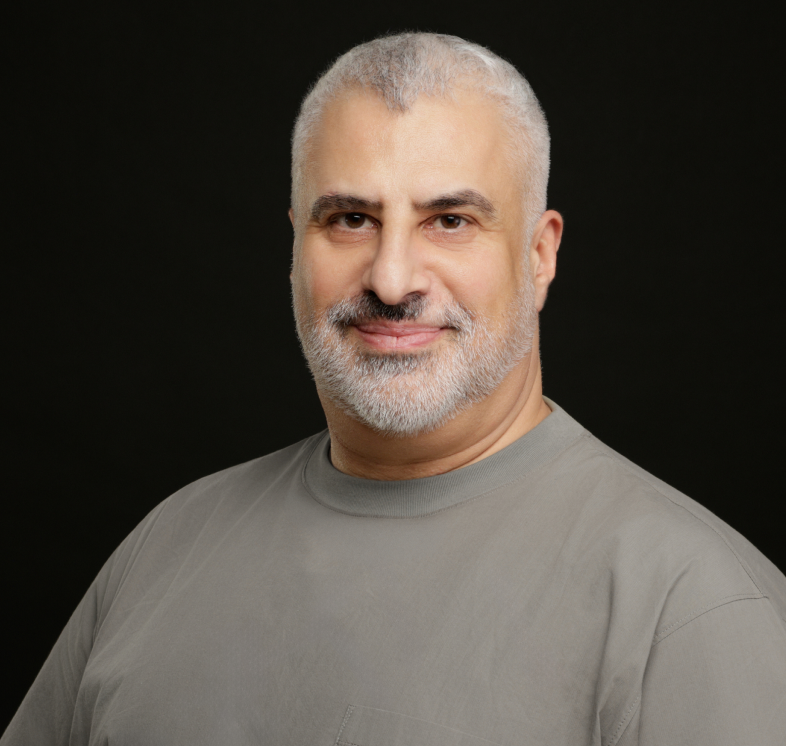
Ziad Kebbi
Ziad, AI is rapidly moving from experimentation into the production workflow. Where do you see the biggest opportunities for AI to transform content production in the MENA region over the next two to three years?
The obvious answer is efficiency, but the interesting answer is leapfrog. This region never built the heavy legacy infrastructure of the older production markets, which means we can build AI-native pipelines from scratch rather than retrofitting them. In the next two to three years, I see the biggest transformation in development: the ability to visualize a format, a world, a character before a single day of shooting, which changes how we pitch, how broadcasters commission, and how much risk sits in every greenlight. Add to that the maturing of Arabic-language models, and for the first time the tools are beginning to serve our language rather than translate into it. That combination, AI-native infrastructure plus Arabic-capable tools, is a genuine regional advantage.
Your company is preparing to launch a new AI facility. What will this facility actually enable producers and clients to do that was not previously possible, and where in the production process do you expect AI to have the greatest impact?
What makes our facility different is where it lives: inside a production company that delivers premium television at scale, not in a lab adjacent to one. Every tool we deploy is tested against real deadlines, real budgets, and real broadcaster standards. In practical terms it lets producers and clients see ideas before they commit to them: visualized formats, previsualized scripted worlds, pilot material at a fraction of traditional cost. It makes categories of content that were previously out of reach for regional budgets – heavy visual effects, animation, large-scale world building – suddenly affordable.
There is a lot of discussion about AI reducing production costs and timelines. In your experience, where can AI deliver genuine efficiencies today, and where does human creative expertise remain indispensable?
Genuine and available today: research, versioning and subtitling, rough assembly, previsualization, pitch materials, and much of the administrative machinery of production. These are real savings, not projections; we see them on working shows. What remains indispensable is judgment. AI compresses the distance from idea to screen, but it does not know which ideas deserve the journey. It cannot tell you why a joke lands in Riyadh and dies in Beirut, it cannot direct a performance, and it cannot sit with a broadcaster at midnight and fix a format that is not working. Taste, cultural instinct, and trust are still entirely human, and in an era of infinite content they become more valuable, not less.
How do you expect the rise of AI-generated and AI-assisted content to change the role of producers, directors, writers and other creative professionals in the MENA market?
Everyone moves up the value chain. Producers become editors-in-chief of far more options than they have ever had; the scarce skill becomes choosing, not generating. Writers concentrate on what the tools cannot supply: premise, voice, structure, cultural truth. Directors gain previsualization power that used to belong only to the biggest budgets. And new roles appear between creative and technical that did not exist two years ago.
I will be honest about the challenge: the traditional training ladder is being automated away. The junior jobs where people learned the craft by doing the grunt work are exactly what AI absorbs first. Companies like ours have a responsibility to rebuild that ladder deliberately, because the next generation of showrunners must come from somewhere.
Your company is also expanding into vertical and microdrama. How do you see AI and these new short-form storytelling formats coming together, and could this create new opportunities for MENA stories to reach international audiences?
Microdrama is a format expanding exponentially in the AI era, and the two fit naturally: speed, volume, and iteration are what the format demands and what the tools provide. We treat vertical drama as a development laboratory. The unit economics let us test stories weekly and let audiences vote with their attention, and the winners earn their way to bigger formats.
For MENA specifically, this is a door to the world that premium drama never offered: the cost barrier is low, AI-driven subtitling and dubbing remove the language wall, and a story from Beirut or Riyadh can find an audience in Warsaw or Seoul within days of being made. It is also where a new generation of Arab storytellers will emerge, working at a pace the traditional industry never allowed.
What are the biggest concerns you hear from broadcasters, streamers and production partners in the region when it comes to AI, particularly around copyright, talent, authenticity and the protection of creative work?
Four concerns come up in almost every conversation. Provenance: what the tools were trained on, and whether the chain of title on AI-assisted material is clean. Talent rights: likeness and voice, where our position is simple, nothing without consent and contract. Authenticity: audiences detect synthetic content faster than executives think, and a brand that floods its schedule with it, breaks down trust it took years to build. And protection of creative work: when copying becomes trivial, format protection matters more than ever.
My honest view is that the deepest protection is originality. The more distinctive your IP, the harder it is to commoditize. Generic content was always vulnerable; AI just accelerated the verdict.
Looking ahead to MIPCOM and the next stage of your company’s development, what do you believe will distinguish the companies that successfully embrace AI from those that simply add AI tools to their existing production workflows?
The difference is between adopting tools and re-engineering the company. Adding AI to an unchanged workflow gives you the same output slightly cheaper, and everyone will have that; it is a discount, not a strategy. The companies that win will rebuild their operating model around what AI makes possible: how they develop, how they greenlight, how they structure teams, and above all what they do with the time and money the tools free up. Our answer is to reinvest it in original IP, because ownership is the only position that compounds. AI will not distinguish companies. What they choose to build with it will.
The obvious answer is efficiency, but the interesting answer is leapfrog. This region never built the heavy legacy infrastructure of the older production markets, which means we can build AI-native pipelines from scratch rather than retrofitting them. In the next two to three years, I see the biggest transformation in development: the ability to visualize a format, a world, a character before a single day of shooting, which changes how we pitch, how broadcasters commission, and how much risk sits in every greenlight. Add to that the maturing of Arabic-language models, and for the first time the tools are beginning to serve our language rather than translate into it. That combination, AI-native infrastructure plus Arabic-capable tools, is a genuine regional advantage.
Your company is preparing to launch a new AI facility. What will this facility actually enable producers and clients to do that was not previously possible, and where in the production process do you expect AI to have the greatest impact?
What makes our facility different is where it lives: inside a production company that delivers premium television at scale, not in a lab adjacent to one. Every tool we deploy is tested against real deadlines, real budgets, and real broadcaster standards. In practical terms it lets producers and clients see ideas before they commit to them: visualized formats, previsualized scripted worlds, pilot material at a fraction of traditional cost. It makes categories of content that were previously out of reach for regional budgets – heavy visual effects, animation, large-scale world building – suddenly affordable.
There is a lot of discussion about AI reducing production costs and timelines. In your experience, where can AI deliver genuine efficiencies today, and where does human creative expertise remain indispensable?
Genuine and available today: research, versioning and subtitling, rough assembly, previsualization, pitch materials, and much of the administrative machinery of production. These are real savings, not projections; we see them on working shows. What remains indispensable is judgment. AI compresses the distance from idea to screen, but it does not know which ideas deserve the journey. It cannot tell you why a joke lands in Riyadh and dies in Beirut, it cannot direct a performance, and it cannot sit with a broadcaster at midnight and fix a format that is not working. Taste, cultural instinct, and trust are still entirely human, and in an era of infinite content they become more valuable, not less.
How do you expect the rise of AI-generated and AI-assisted content to change the role of producers, directors, writers and other creative professionals in the MENA market?
Everyone moves up the value chain. Producers become editors-in-chief of far more options than they have ever had; the scarce skill becomes choosing, not generating. Writers concentrate on what the tools cannot supply: premise, voice, structure, cultural truth. Directors gain previsualization power that used to belong only to the biggest budgets. And new roles appear between creative and technical that did not exist two years ago.
I will be honest about the challenge: the traditional training ladder is being automated away. The junior jobs where people learned the craft by doing the grunt work are exactly what AI absorbs first. Companies like ours have a responsibility to rebuild that ladder deliberately, because the next generation of showrunners must come from somewhere.
Your company is also expanding into vertical and microdrama. How do you see AI and these new short-form storytelling formats coming together, and could this create new opportunities for MENA stories to reach international audiences?
Microdrama is a format expanding exponentially in the AI era, and the two fit naturally: speed, volume, and iteration are what the format demands and what the tools provide. We treat vertical drama as a development laboratory. The unit economics let us test stories weekly and let audiences vote with their attention, and the winners earn their way to bigger formats.
For MENA specifically, this is a door to the world that premium drama never offered: the cost barrier is low, AI-driven subtitling and dubbing remove the language wall, and a story from Beirut or Riyadh can find an audience in Warsaw or Seoul within days of being made. It is also where a new generation of Arab storytellers will emerge, working at a pace the traditional industry never allowed.
What are the biggest concerns you hear from broadcasters, streamers and production partners in the region when it comes to AI, particularly around copyright, talent, authenticity and the protection of creative work?
Four concerns come up in almost every conversation. Provenance: what the tools were trained on, and whether the chain of title on AI-assisted material is clean. Talent rights: likeness and voice, where our position is simple, nothing without consent and contract. Authenticity: audiences detect synthetic content faster than executives think, and a brand that floods its schedule with it, breaks down trust it took years to build. And protection of creative work: when copying becomes trivial, format protection matters more than ever.
My honest view is that the deepest protection is originality. The more distinctive your IP, the harder it is to commoditize. Generic content was always vulnerable; AI just accelerated the verdict.
Looking ahead to MIPCOM and the next stage of your company’s development, what do you believe will distinguish the companies that successfully embrace AI from those that simply add AI tools to their existing production workflows?
The difference is between adopting tools and re-engineering the company. Adding AI to an unchanged workflow gives you the same output slightly cheaper, and everyone will have that; it is a discount, not a strategy. The companies that win will rebuild their operating model around what AI makes possible: how they develop, how they greenlight, how they structure teams, and above all what they do with the time and money the tools free up. Our answer is to reinvest it in original IP, because ownership is the only position that compounds. AI will not distinguish companies. What they choose to build with it will.