

The Rise of Microdramas in CEE
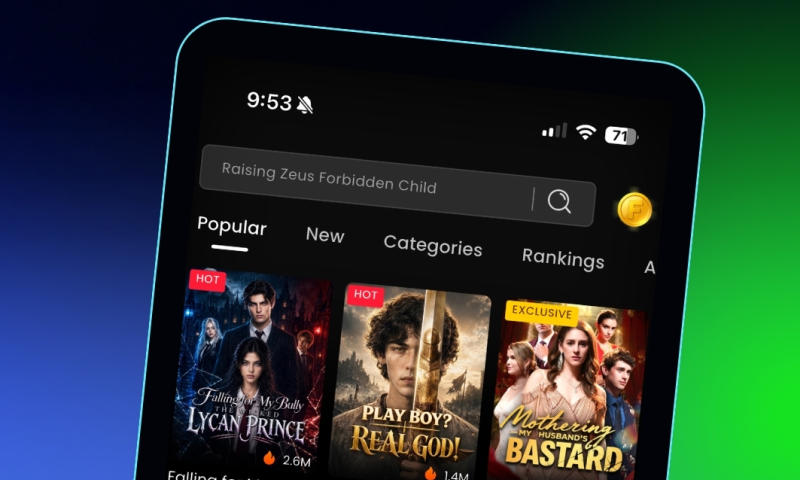
Microdramas are now rising rapidly in popularity across the globe. The appeal is straightforward: the episodes are short, the stories are designed for vertical screens and mobile consumption, and production costs are substantially lower than for conventional scripted drama, while the audience response can be measured almost immediately.
For CEE, this is particularly relevant because fragmentation has traditionally been both an obstacle and a source of opportunity. A conventional drama may require substantial investment to justify production for a small language market. A microdrama can be tested with a much smaller initial commitment. A successful concept can then be localized, adapted or developed into a larger production.
Łukasz Wysocki, Founder & Managing Director of MediaSpurs, has been closely following the development of the genre. With nearly 20 years of experience across television, streaming, media-tech and digital entertainment, and having worked with companies including NBCUniversal, Sky, Hayu and Polsat Plus Group, Wysocki is now focused through MediaSpurs on international media representation, market entry, distribution and strategic partnerships across CEE, with particular attention to the creator economy, vertical content and microdramas.
For Wysocki, the key question is no longer whether the audience exists. It is how the television industry builds the commercial ecosystem around it.
For CEE, this is particularly relevant because fragmentation has traditionally been both an obstacle and a source of opportunity. A conventional drama may require substantial investment to justify production for a small language market. A microdrama can be tested with a much smaller initial commitment. A successful concept can then be localized, adapted or developed into a larger production.
Łukasz Wysocki, Founder & Managing Director of MediaSpurs, has been closely following the development of the genre. With nearly 20 years of experience across television, streaming, media-tech and digital entertainment, and having worked with companies including NBCUniversal, Sky, Hayu and Polsat Plus Group, Wysocki is now focused through MediaSpurs on international media representation, market entry, distribution and strategic partnerships across CEE, with particular attention to the creator economy, vertical content and microdramas.
For Wysocki, the key question is no longer whether the audience exists. It is how the television industry builds the commercial ecosystem around it.

Łukasz Wysocki, Founder & Managing
Director of MediaSpurs
Łukasz, microdramas have exploded in markets such as China and are now attracting major global investment. What do you see as the real potential for microdramas in CEE, and which markets in the region are best positioned to adopt the format?
Microdramas are already in CEE. They simply arrived through social advertising and Asian D2C apps, before the local media industry started paying attention.
Poland is the clearest example. Almost 10 million people have encountered the format and 10% have used or tested dedicated apps. That is significant engagement for a category with almost no local originals or distribution partnerships.
This is also why MediaSpurs recently became COL Group International’s Official Partner. We see an opportunity to take microdrama beyond direct-to-consumer apps and connect it with the local media, telecom and brand ecosystem.
Poland is the strongest entry market because of its scale and developed digital-video sector. Romania is another market I would watch. Across smaller CEE countries, growth may depend more on local partnerships than on launching another standalone app.
The audience is already here. What is still missing is the ecosystem around it.
CEE is a relatively fragmented region with different languages, audience behaviors and levels of digital maturity. Could microdramas actually benefit from this fragmentation by allowing producers and platforms to create highly localized content at lower costs?
Yes, definitely. Microdramas are much cheaper to produce than traditional drama, so they lower both the entry cost and the cost of failure. This makes local adaptations or originals more realistic, even in smaller markets.
But I would still separate localized content from locally produced content. Creating an original series for every country will not always make sense. A platform can start with a proven title or format, localize it, test the audience response and then decide whether a local remake or original production is justified. AI makes this process faster and cheaper, but language is only one part of localization. A technically perfect dub will not help if the story, characters or social context feel distant from the local audience.
CEE is also not simply importing the format. HOLYWATER, now one of the major global vertical-content players, was founded in Ukraine. It shows that innovation in this category can come from the region as well.
The opportunity is to experiment country by country. That matters in CEE precisely because it is not one market and cannot be approached as one.
Which distribution and partnership models could drive the next phase of microdrama growth in CEE?
The next phase cannot rely only on dedicated apps acquiring users through social-media advertising. That model has built the category, but it can be expensive and difficult to scale across many smaller markets.
I see the biggest opportunity in B2B2C partnerships with telecom and pay-TV operators, broadcasters and established streaming platforms. Microdrama services could be included in entertainment bundles, sold as add-ons or offered through operator billing. Broadcasters and streaming platforms could also license selected titles or introduce dedicated microdrama sections without building a new service from scratch.
There is also strong potential for ad-supported distribution and branded microdramas. Social media will remain important for discovery, but it does not have to be the final destination.
We have not yet seen these models implemented at scale in CEE. For me, that is the clearest gap and the most interesting commercial opportunity for us at MediaSpurs.
How do you see AI changing the CEE television and streaming business over the next few years and where do you see are the biggest commercial opportunities?
For me, the biggest change will be speed. CEE is a very fragmented region, with many languages and relatively small individual markets. That is not necessarily a problem, but it has always made launches more complicated and expensive.
AI can change this quite quickly. A series could launch in Poland, Romania or Czechia on the same day as in the US, rather than several weeks later, when many viewers have already seen spoilers or found a pirated version. Localisation is only one part of it. AI can also help companies work with large content libraries, prepare trailers and social clips, improve recommendations and make advertising more relevant.
I do not think the opportunity is about replacing people. It is about making more content commercially viable in more markets and doing it much faster.
AI is developing at different speeds across CEE markets. Which applications of AI do you believe will have the most immediate and commercially meaningful impact on the region’s TV and streaming businesses?
As mentioned, localization will have the most immediate commercial impact. Faster dubbing, subtitles, metadata and promotional materials mean that more content can launch across several CEE markets at the same time. ElevenLabs is a particularly relevant example because it is a Polish-founded company solving a challenge that has always been important in this region.
The second area is library monetization. AI can help broadcasters and distributors search, tag and repackage thousands of hours of existing content for VOD, FAST and social media.
It will also improve advertising by creating local campaign versions faster and enabling better contextual targeting.
These applications may be less visible than AI-generated productions, but they can already reduce costs, accelerate launches and create new revenue.
Microdramas are already in CEE. They simply arrived through social advertising and Asian D2C apps, before the local media industry started paying attention.
Poland is the clearest example. Almost 10 million people have encountered the format and 10% have used or tested dedicated apps. That is significant engagement for a category with almost no local originals or distribution partnerships.
This is also why MediaSpurs recently became COL Group International’s Official Partner. We see an opportunity to take microdrama beyond direct-to-consumer apps and connect it with the local media, telecom and brand ecosystem.
Poland is the strongest entry market because of its scale and developed digital-video sector. Romania is another market I would watch. Across smaller CEE countries, growth may depend more on local partnerships than on launching another standalone app.
The audience is already here. What is still missing is the ecosystem around it.
CEE is a relatively fragmented region with different languages, audience behaviors and levels of digital maturity. Could microdramas actually benefit from this fragmentation by allowing producers and platforms to create highly localized content at lower costs?
Yes, definitely. Microdramas are much cheaper to produce than traditional drama, so they lower both the entry cost and the cost of failure. This makes local adaptations or originals more realistic, even in smaller markets.
But I would still separate localized content from locally produced content. Creating an original series for every country will not always make sense. A platform can start with a proven title or format, localize it, test the audience response and then decide whether a local remake or original production is justified. AI makes this process faster and cheaper, but language is only one part of localization. A technically perfect dub will not help if the story, characters or social context feel distant from the local audience.
CEE is also not simply importing the format. HOLYWATER, now one of the major global vertical-content players, was founded in Ukraine. It shows that innovation in this category can come from the region as well.
The opportunity is to experiment country by country. That matters in CEE precisely because it is not one market and cannot be approached as one.
Which distribution and partnership models could drive the next phase of microdrama growth in CEE?
The next phase cannot rely only on dedicated apps acquiring users through social-media advertising. That model has built the category, but it can be expensive and difficult to scale across many smaller markets.
I see the biggest opportunity in B2B2C partnerships with telecom and pay-TV operators, broadcasters and established streaming platforms. Microdrama services could be included in entertainment bundles, sold as add-ons or offered through operator billing. Broadcasters and streaming platforms could also license selected titles or introduce dedicated microdrama sections without building a new service from scratch.
There is also strong potential for ad-supported distribution and branded microdramas. Social media will remain important for discovery, but it does not have to be the final destination.
We have not yet seen these models implemented at scale in CEE. For me, that is the clearest gap and the most interesting commercial opportunity for us at MediaSpurs.
How do you see AI changing the CEE television and streaming business over the next few years and where do you see are the biggest commercial opportunities?
For me, the biggest change will be speed. CEE is a very fragmented region, with many languages and relatively small individual markets. That is not necessarily a problem, but it has always made launches more complicated and expensive.
AI can change this quite quickly. A series could launch in Poland, Romania or Czechia on the same day as in the US, rather than several weeks later, when many viewers have already seen spoilers or found a pirated version. Localisation is only one part of it. AI can also help companies work with large content libraries, prepare trailers and social clips, improve recommendations and make advertising more relevant.
I do not think the opportunity is about replacing people. It is about making more content commercially viable in more markets and doing it much faster.
AI is developing at different speeds across CEE markets. Which applications of AI do you believe will have the most immediate and commercially meaningful impact on the region’s TV and streaming businesses?
As mentioned, localization will have the most immediate commercial impact. Faster dubbing, subtitles, metadata and promotional materials mean that more content can launch across several CEE markets at the same time. ElevenLabs is a particularly relevant example because it is a Polish-founded company solving a challenge that has always been important in this region.
The second area is library monetization. AI can help broadcasters and distributors search, tag and repackage thousands of hours of existing content for VOD, FAST and social media.
It will also improve advertising by creating local campaign versions faster and enabling better contextual targeting.
These applications may be less visible than AI-generated productions, but they can already reduce costs, accelerate launches and create new revenue.