

Stella Litou: The more global the market becomes, the more valuable local relevance is
Stella Litou has been the CEO of RTL Croatia and Pro Plus in Slovenia since 2023. During this period she has successfully led the transformation of the two broadcasters into modern media companies with a strong presence on linear TV, on-demand and digital platforms, while also overseeing the expansion of streaming service VOYO into the other former Yugoslavia markets.
In this exclusive interview with CEETV’s Yako Molhov, Litou shared some insights on the recent historical results achieved by the comprehensive election coverage and debates of POP TV and the importance of sustaining credibility in a media space flooded with disinformation. She also touched upon the development and synergies between the operations in Croatia and Slovenia and how Pro Plus and RTL Croatia build their media brands and successfully monetize content on TV, digital and on demand.
In this exclusive interview with CEETV’s Yako Molhov, Litou shared some insights on the recent historical results achieved by the comprehensive election coverage and debates of POP TV and the importance of sustaining credibility in a media space flooded with disinformation. She also touched upon the development and synergies between the operations in Croatia and Slovenia and how Pro Plus and RTL Croatia build their media brands and successfully monetize content on TV, digital and on demand.

Stella Litou, CEO RTL Croatia and Pro Plus Slovenia
Stella, this year POP TV delivered record-breaking audiences with Slovenia Decides 2026 Parliamentary elections coverage. What did this project teach you about television’s role in high-impact national moments like elections?
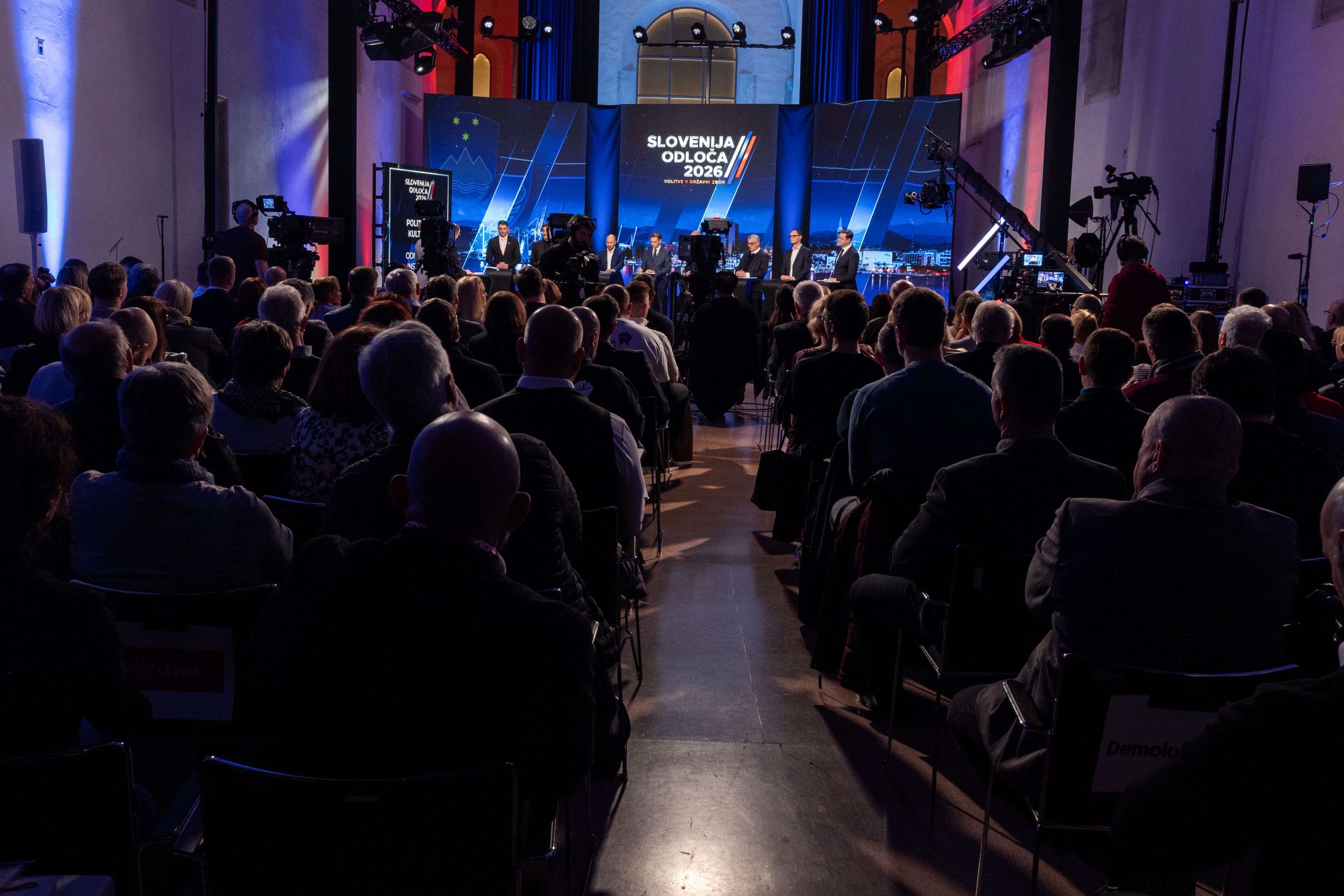
Our 2026 Slovenian Parliamentary election coverage clearly demonstrated that television remains the most powerful platform in moments of national importance. We didn’t just cover the elections, but we created a space where the country could come together, engage, and form opinions based on credible, verified information. By taking debates out of the studio in Ljubljana to different parts and towns of Slovenia, we brought the conversation closer to people—their everyday environment, concerns, and reality.
The results confirm that we got it right. We achieved record-breaking audiences and exceptionally high viewing shares, which can be divided into three key pillars. The first four debates were the most watched election debates in the past 15 years, the one-on-one debate between the two leading candidates for the prime minister delivered the highest audience share (64%) since 2000, and election night achieved a 45% audience share, 50% higher than the main competitor.
All this proves that when content is relevant, trustworthy and accessible, audiences respond at scale. In moments like elections, people are not looking for speed alone, they are looking for clarity, context, and trust.
The decision to take election debates out of the studio to different towns in Slovenia proved highly successful. Do you see this kind of format innovation as essential for maintaining relevance and trust?
Absolutely, but for us, innovation is not just about novelty, it’s about relevance. Taking debates to different parts of Slovenia was conscious editorial strategic decision. It brought us closer to communities and made the conversation more inclusive, more grounded, and more authentic. Relevance today is built on being close to people, geographically, emotionally, and socially. The closer you are to your audience, the stronger the connection and the higher the level of trust. Ultimately, innovation only matters if it strengthens that relationship, and in this case, it clearly did.
With audiences increasingly consuming news on digital and social platforms, how do you balance the need for reach and clicks with the responsibility to maintain trust and credibility?
There is no trade-off between reach and credibility. You can generate short-term traffic through speed or sensationalism, but you build strong, sustainable media brands through trust. Our principle is very clear: we don’t compete to be first, we compete to be right. There are many situations where we deliberately choose not to publish until information is fully verified. That discipline builds long-term loyalty and direct relationships with our audience, something that no algorithm can replace. For example, in Slovenia, 87% of 24ur.com traffic comes directly, which shows a strong, intentional relationship with our audience and reinforces the value of trust over clicks.
In Croatia, we have built the largest social media footprint in the country, generating close to 4 billion views, equivalent to the combined reach of the entire competition. This is the result of consistently delivering clear, relevant, and well-told stories in formats that engage audiences. Our efforts have been recognized by the European Parliament, which has awarded us funding to serve as a strategic partner in the fields of communication, combating disinformation, and strengthening media literacy.
In a media landscape shaped by disinformation, how do you ensure that Pro Plus and RTL Croatia remain reliable anchors of credible information?
Credibility is our most valuable asset, and it is built every single day. Not just in moments of crisis, but every evening when viewers turn to RTL Danas or 24UR, and every morning when they open 24ur.com, net.hr or danas.hr. In today’s noisy environment, people are actively searching for trusted information. The moment we start taking that trust for granted is the moment we begin to lose it. So, we simply don't.
We see this reflected in audience behavior. For example, during the 2026 Slovenian Parliamentary elections period, some of our key programs reached over 70% share among viewers aged 18–24. At the same time, 24ur.com recorded the highest traffic in its history, reaching 76% of Slovenia’s online population, and generating nearly 150-million-page views. This shows that when the topic truly matters, audiences – the younger ones included – turn to credible, live, and verified information.
How are your operations currently performing in Slovenia and Croatia respectively, and where are you seeing the strongest growth or pressure points?
Both markets show a similar dynamic: strong linear performance combined with accelerating digital push driving the market. In Slovenia, we continue to lead across television and digital, with POP TV by far the most-watched broadcast channel, 24UR the undisputed leading news brand, and VOYO the number one local streaming platform.
RTL Croatia maintains a strong position with its popular local reality and fiction programs and leading main news program, RTL Danas. It also continues to perform strongly with major live events, especially the European and World Handball Championships, which we broadcast at the beginning of each year, as well as Formula 1, for which we have obtained exclusive broadcasting rights for both Croatia and Slovenia. Our digital assets, Net.hr and Danas.hr remain among the most-read web portals in the country.
Overall, in Adria region we have created the leading streaming ecosystem, scaling from Slovenia and Croatia into Serbia and Bosnia with digital transformation fully integrated into every function of our operation.
What are the synergies and good practices that you have introduced for your operations in Croatia and Slovenia?
Our strength lies in combining scale with local expertise. We share best practices in programming, technology, data and monetization, while content decisions remain local. This balance between shared knowledge and strong local autonomy is what drives performance. Scale also becomes increasingly important when content travels across markets. The launch of VOYO in Serbia and Bosnia and Herzegovina is further proof that both our platform and our content strategy can successfully scale on a regional level.

Slovenia’s ad market declined by 4% in 2025, with budgets shifting towards global digital platforms. How is this changing the way you structure your commercial and content strategies? What about the Croatian ad market?
This trend reinforces the importance of trusted, high-quality environments. Global platforms offer reach, but they don’t offer the same level of trust, brand safety, or relevance. Our response is to focus on premium local content and deeper partnerships with advertisers and commercial partners.
Advertisers today are not just buying reach, they are buying access to audiences in a trusted, high-attention environment, combined with the emotional impact of premium local storytelling. So, we increasingly move beyond selling only advertising space towards building integrated partnerships and storytelling opportunities across our content, entertainment, and news ecosystem powered by a love brand.
Sports-driven moments, from major transfers to international victories, continue to attract premium advertisers. How important are these “national narrative” events in your programming and monetization strategy?
Sports is central to our strategy. It is one of the formats that people watch live, together with friends and family, and with strong emotional engagement. That makes it incredibly powerful both editorially and commercially.
Our portfolio includes the UEFA Champions League, Formula 1, MotoGP, Superbike, the E1 Series, the CEV Volleyball Cup, 2026 European Futsal Championship was a success as well, and many other premium sports properties. In Croatia, for example, RTL’s coverage of the 2026 European Handball Championship delivered exceptional nationwide engagement around the national team and an average audience share of 54% on RTL, with the most-watched match – Germany vs. Croatia – reaching a 66% share.
At the same time, we continue to expand our premium sports offering with additional content such as combat sports on VOYO, including regional FNC partnership, which attract highly engaged audiences and younger demographics. We see strong momentum in this segment and plan to continue strengthening our sports portfolio across both linear and streaming platforms.
With global platforms capturing a significant share of digital ad spend, how critical is local content as a differentiator for broadcasters in markets like Slovenia and Croatia?
Local content is our strongest competitive advantage in both markets. Global platforms can scale, but they do not replicate local language, culture, and storytelling, and that emotional connection drives loyalty. We are not a commodity; we nurture a deep connection with our viewers across platforms.
The most powerful content is authentic and relatable, reflecting people’s lives, challenges, and humor, as seen, for example, with Camping Royals (aka Hidden in Paradise) on POP TV. These are the stories that move beyond the screen and become part of everyday culture.
Investment in own IP, though, does not come unchallenged. We face the issue of widespread piracy, which negatively affects the entire media and creative ecosystem we operate in. Premium local production requires significant investment, and protecting intellectual property is essential to ensure the long-term sustainability of quality local storytelling. That is also why we are pleased that CME has joined the Alliance for Creativity and Entertainment (ACE) as part of a broader industry effort to protect creative value and premium content. We are committed to tackling this challenge collectively as a group and in every one of our markets.

Shows like MasterChef, Slovenia's Got Talent, and The Chase remain key pillars of your schedules in Slovenia. How do you balance global formats with locally developed IP?
It’s about combining the best of both worlds. Global formats bring proven concepts and structure, while local productions and stories build identity, differentiation, and long-term value. Our strategy is to leverage global expertise while continuously investing in strong local storytelling that is monetized through effective windowing.
More broadly, how would you define your programming strategy today across both markets, and what are the key pillars driving performance in Slovenia versus Croatia?
Our programming strategy is built on three clear pillars. The first is development and production, driven by strong local content that reflects the culture, language, and identity of each market. The second is creation, combining trusted news, premium sports, and carefully curated international formats to deliver relevant and engaging content for broad audiences. The third is distribution, supported by data-driven decision-making and continuous audience insights, which allow us to refine content, scheduling, and platform reach in real time. This combination enables us to maintain a strong local identity in both Slovenia and Croatia while maximizing audience reach across all platforms.
VOYO is widely seen as a standout local streaming success in CEE. What have been the key strategic decisions behind its growth, particularly in a market where global streamers dominate? What are the numbers for Croatia and Slovenia?
VOYO’s success is built on a deep understanding of audience needs, with local content and user experience at its core. This foundation drives growth across all markets, from early investment in local originals and strong integration with linear TV, to continuous product development powered by data, personalization, and content analytics.
In Slovenia, this strategy delivers clear results. VOYO is the leading VOD platform, with around 84% of viewing coming from local content — strong proof of the power of local storytelling in a highly competitive streaming environment. In Croatia, the same approach has driven rapid growth. VOYO is today the leading local streaming platform in the region and the second-largest streaming service in the market.
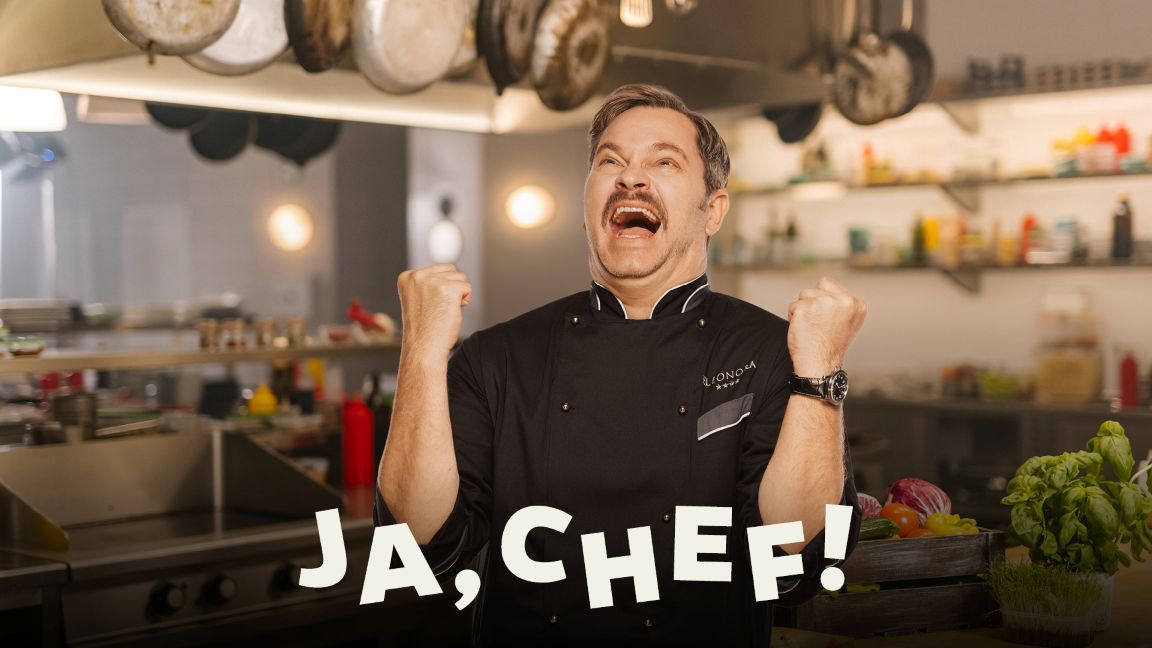
To put this into perspective, in Slovenia, our local series Yes, Chef (aka Kitchen) has so far generated 46 million views on VOYO, in a country of just 2 million people. Meanwhile, in Croatia, the fifth season of The Bachelor generated 3.5 million views in a market of around 4 million people.
This approach is now expanding to Serbia and Bosnia and Herzegovina, where we are already seeing strong audience engagement to locally and regionally on relevant content. VOYO is not just entering these markets — it is actively shaping them. Content travels successfully across markets and, combined with an effective distribution strategy, is delivering impressive results that are expected to continue growing.
How do you see VOYO evolving alongside your linear channels? Are you building a fully integrated content ecosystem across broadcast, digital, and VOD?
Linear TV delivers scale and shared viewing moments, while VOYO adds flexibility, personalization, and deeper engagement. Together, they allow us to maximize the value of our content and respond to different viewing habits across audiences. At the same time, this is not about separate platforms, but about one connected media environment where linear TV, digital, and streaming reinforce each other and drive overall engagement.
To be more specific, this complementary model is clearly visible with The Farm in Slovenia. The current season, which is still on air, continues to deliver a 35% plus average audience share on linear TV, while simultaneously generating millions of views also on VOYO with video views increasing by almost 30% compared to the previous season. In Croatia, the fifth season of The Bachelor performed strongly on linear TV, while video views on the VOYO platform increased by 60% compared to the previous season.
In managing this dual-market strategy, what elements of your business do you standardize across both stations, and where is localization essential?
We are very deliberate about the localness of our business and about where standardization creates value versus where localization is essential to remain relevant and competitive. We standardize core elements that drive efficiency and scalability across markets, primarily technology, data infrastructure, and operational processes. AI already supports several areas of our operations, from production workflows and transcription to content personalization and user experience on VOYO.
At the same time, localness is critical in areas that directly touch the audience. Local audiences connect with local stories, heroes, and stars in both news and entertainment. Content, editorial decisions, and the way we build and nurture relationships with viewers must always be deeply rooted in the local market. Audiences connect with stories that reflect their own culture, language, and everyday experiences, which is why local production and editorial autonomy remain at the heart of our strategy.
Ultimately, our model is about combining international scale with local relevance — using shared capabilities to operate efficiently while empowering local teams to create meaningful, distinctive content and trusted relationships. This balance enables us to continuously improve the quality of our output, strengthen creative capabilities, deepen audience insights through personalization, and enhance the overall user experience, while preserving local culture and national identity.
By scaling content that successfully travels across the region, as recently seen with the strong performance of The Bachelor Croatia, we create efficiencies that allow us to reinvest further into local content, creating a continuous cycle of growth, relevance, and audience loyalty.
Beyond audience and business performance, we are equally focused on organizational culture and long-term sustainability reflecting strong engagement, trust, and a shared sense of purpose also across the organization.

Looking ahead, how do you see the media landscape in CEE evolving over the next five years, particularly in terms of digitalization, consolidation, and competition with global players?
As the media landscape evolves, we see an accelerated adoption of a digital mindset, more data-driven decision-making and the growing importance of strong local brands. Paradoxically, the more global the market becomes, the more valuable local relevance is.
In an age of infinite choice, audiences are not looking for volume, they are looking for connection. And that connection is rooted in local language, culture and storytelling. The companies that succeed will be those who can unite scale, technology and authentic local narratives into one seamless ecosystem.
Our 2026 Slovenian Parliamentary election coverage clearly demonstrated that television remains the most powerful platform in moments of national importance. We didn’t just cover the elections, but we created a space where the country could come together, engage, and form opinions based on credible, verified information. By taking debates out of the studio in Ljubljana to different parts and towns of Slovenia, we brought the conversation closer to people—their everyday environment, concerns, and reality.
The results confirm that we got it right. We achieved record-breaking audiences and exceptionally high viewing shares, which can be divided into three key pillars. The first four debates were the most watched election debates in the past 15 years, the one-on-one debate between the two leading candidates for the prime minister delivered the highest audience share (64%) since 2000, and election night achieved a 45% audience share, 50% higher than the main competitor.
All this proves that when content is relevant, trustworthy and accessible, audiences respond at scale. In moments like elections, people are not looking for speed alone, they are looking for clarity, context, and trust.
The decision to take election debates out of the studio to different towns in Slovenia proved highly successful. Do you see this kind of format innovation as essential for maintaining relevance and trust?
Absolutely, but for us, innovation is not just about novelty, it’s about relevance. Taking debates to different parts of Slovenia was conscious editorial strategic decision. It brought us closer to communities and made the conversation more inclusive, more grounded, and more authentic. Relevance today is built on being close to people, geographically, emotionally, and socially. The closer you are to your audience, the stronger the connection and the higher the level of trust. Ultimately, innovation only matters if it strengthens that relationship, and in this case, it clearly did.
With audiences increasingly consuming news on digital and social platforms, how do you balance the need for reach and clicks with the responsibility to maintain trust and credibility?
There is no trade-off between reach and credibility. You can generate short-term traffic through speed or sensationalism, but you build strong, sustainable media brands through trust. Our principle is very clear: we don’t compete to be first, we compete to be right. There are many situations where we deliberately choose not to publish until information is fully verified. That discipline builds long-term loyalty and direct relationships with our audience, something that no algorithm can replace. For example, in Slovenia, 87% of 24ur.com traffic comes directly, which shows a strong, intentional relationship with our audience and reinforces the value of trust over clicks.
In Croatia, we have built the largest social media footprint in the country, generating close to 4 billion views, equivalent to the combined reach of the entire competition. This is the result of consistently delivering clear, relevant, and well-told stories in formats that engage audiences. Our efforts have been recognized by the European Parliament, which has awarded us funding to serve as a strategic partner in the fields of communication, combating disinformation, and strengthening media literacy.
In a media landscape shaped by disinformation, how do you ensure that Pro Plus and RTL Croatia remain reliable anchors of credible information?
Credibility is our most valuable asset, and it is built every single day. Not just in moments of crisis, but every evening when viewers turn to RTL Danas or 24UR, and every morning when they open 24ur.com, net.hr or danas.hr. In today’s noisy environment, people are actively searching for trusted information. The moment we start taking that trust for granted is the moment we begin to lose it. So, we simply don't.
We see this reflected in audience behavior. For example, during the 2026 Slovenian Parliamentary elections period, some of our key programs reached over 70% share among viewers aged 18–24. At the same time, 24ur.com recorded the highest traffic in its history, reaching 76% of Slovenia’s online population, and generating nearly 150-million-page views. This shows that when the topic truly matters, audiences – the younger ones included – turn to credible, live, and verified information.
How are your operations currently performing in Slovenia and Croatia respectively, and where are you seeing the strongest growth or pressure points?
Both markets show a similar dynamic: strong linear performance combined with accelerating digital push driving the market. In Slovenia, we continue to lead across television and digital, with POP TV by far the most-watched broadcast channel, 24UR the undisputed leading news brand, and VOYO the number one local streaming platform.
RTL Croatia maintains a strong position with its popular local reality and fiction programs and leading main news program, RTL Danas. It also continues to perform strongly with major live events, especially the European and World Handball Championships, which we broadcast at the beginning of each year, as well as Formula 1, for which we have obtained exclusive broadcasting rights for both Croatia and Slovenia. Our digital assets, Net.hr and Danas.hr remain among the most-read web portals in the country.
Overall, in Adria region we have created the leading streaming ecosystem, scaling from Slovenia and Croatia into Serbia and Bosnia with digital transformation fully integrated into every function of our operation.
What are the synergies and good practices that you have introduced for your operations in Croatia and Slovenia?
Our strength lies in combining scale with local expertise. We share best practices in programming, technology, data and monetization, while content decisions remain local. This balance between shared knowledge and strong local autonomy is what drives performance. Scale also becomes increasingly important when content travels across markets. The launch of VOYO in Serbia and Bosnia and Herzegovina is further proof that both our platform and our content strategy can successfully scale on a regional level.
Slovenia’s ad market declined by 4% in 2025, with budgets shifting towards global digital platforms. How is this changing the way you structure your commercial and content strategies? What about the Croatian ad market?
This trend reinforces the importance of trusted, high-quality environments. Global platforms offer reach, but they don’t offer the same level of trust, brand safety, or relevance. Our response is to focus on premium local content and deeper partnerships with advertisers and commercial partners.
Advertisers today are not just buying reach, they are buying access to audiences in a trusted, high-attention environment, combined with the emotional impact of premium local storytelling. So, we increasingly move beyond selling only advertising space towards building integrated partnerships and storytelling opportunities across our content, entertainment, and news ecosystem powered by a love brand.
Sports-driven moments, from major transfers to international victories, continue to attract premium advertisers. How important are these “national narrative” events in your programming and monetization strategy?
Sports is central to our strategy. It is one of the formats that people watch live, together with friends and family, and with strong emotional engagement. That makes it incredibly powerful both editorially and commercially.
Our portfolio includes the UEFA Champions League, Formula 1, MotoGP, Superbike, the E1 Series, the CEV Volleyball Cup, 2026 European Futsal Championship was a success as well, and many other premium sports properties. In Croatia, for example, RTL’s coverage of the 2026 European Handball Championship delivered exceptional nationwide engagement around the national team and an average audience share of 54% on RTL, with the most-watched match – Germany vs. Croatia – reaching a 66% share.
At the same time, we continue to expand our premium sports offering with additional content such as combat sports on VOYO, including regional FNC partnership, which attract highly engaged audiences and younger demographics. We see strong momentum in this segment and plan to continue strengthening our sports portfolio across both linear and streaming platforms.
With global platforms capturing a significant share of digital ad spend, how critical is local content as a differentiator for broadcasters in markets like Slovenia and Croatia?
Local content is our strongest competitive advantage in both markets. Global platforms can scale, but they do not replicate local language, culture, and storytelling, and that emotional connection drives loyalty. We are not a commodity; we nurture a deep connection with our viewers across platforms.
The most powerful content is authentic and relatable, reflecting people’s lives, challenges, and humor, as seen, for example, with Camping Royals (aka Hidden in Paradise) on POP TV. These are the stories that move beyond the screen and become part of everyday culture.
Investment in own IP, though, does not come unchallenged. We face the issue of widespread piracy, which negatively affects the entire media and creative ecosystem we operate in. Premium local production requires significant investment, and protecting intellectual property is essential to ensure the long-term sustainability of quality local storytelling. That is also why we are pleased that CME has joined the Alliance for Creativity and Entertainment (ACE) as part of a broader industry effort to protect creative value and premium content. We are committed to tackling this challenge collectively as a group and in every one of our markets.
Camping Royals
Shows like MasterChef, Slovenia's Got Talent, and The Chase remain key pillars of your schedules in Slovenia. How do you balance global formats with locally developed IP?
It’s about combining the best of both worlds. Global formats bring proven concepts and structure, while local productions and stories build identity, differentiation, and long-term value. Our strategy is to leverage global expertise while continuously investing in strong local storytelling that is monetized through effective windowing.
More broadly, how would you define your programming strategy today across both markets, and what are the key pillars driving performance in Slovenia versus Croatia?
Our programming strategy is built on three clear pillars. The first is development and production, driven by strong local content that reflects the culture, language, and identity of each market. The second is creation, combining trusted news, premium sports, and carefully curated international formats to deliver relevant and engaging content for broad audiences. The third is distribution, supported by data-driven decision-making and continuous audience insights, which allow us to refine content, scheduling, and platform reach in real time. This combination enables us to maintain a strong local identity in both Slovenia and Croatia while maximizing audience reach across all platforms.
VOYO is widely seen as a standout local streaming success in CEE. What have been the key strategic decisions behind its growth, particularly in a market where global streamers dominate? What are the numbers for Croatia and Slovenia?
VOYO’s success is built on a deep understanding of audience needs, with local content and user experience at its core. This foundation drives growth across all markets, from early investment in local originals and strong integration with linear TV, to continuous product development powered by data, personalization, and content analytics.
In Slovenia, this strategy delivers clear results. VOYO is the leading VOD platform, with around 84% of viewing coming from local content — strong proof of the power of local storytelling in a highly competitive streaming environment. In Croatia, the same approach has driven rapid growth. VOYO is today the leading local streaming platform in the region and the second-largest streaming service in the market.
To put this into perspective, in Slovenia, our local series Yes, Chef (aka Kitchen) has so far generated 46 million views on VOYO, in a country of just 2 million people. Meanwhile, in Croatia, the fifth season of The Bachelor generated 3.5 million views in a market of around 4 million people.
This approach is now expanding to Serbia and Bosnia and Herzegovina, where we are already seeing strong audience engagement to locally and regionally on relevant content. VOYO is not just entering these markets — it is actively shaping them. Content travels successfully across markets and, combined with an effective distribution strategy, is delivering impressive results that are expected to continue growing.
The Kitchen
How do you see VOYO evolving alongside your linear channels? Are you building a fully integrated content ecosystem across broadcast, digital, and VOD?
Linear TV delivers scale and shared viewing moments, while VOYO adds flexibility, personalization, and deeper engagement. Together, they allow us to maximize the value of our content and respond to different viewing habits across audiences. At the same time, this is not about separate platforms, but about one connected media environment where linear TV, digital, and streaming reinforce each other and drive overall engagement.
To be more specific, this complementary model is clearly visible with The Farm in Slovenia. The current season, which is still on air, continues to deliver a 35% plus average audience share on linear TV, while simultaneously generating millions of views also on VOYO with video views increasing by almost 30% compared to the previous season. In Croatia, the fifth season of The Bachelor performed strongly on linear TV, while video views on the VOYO platform increased by 60% compared to the previous season.
In managing this dual-market strategy, what elements of your business do you standardize across both stations, and where is localization essential?
We are very deliberate about the localness of our business and about where standardization creates value versus where localization is essential to remain relevant and competitive. We standardize core elements that drive efficiency and scalability across markets, primarily technology, data infrastructure, and operational processes. AI already supports several areas of our operations, from production workflows and transcription to content personalization and user experience on VOYO.
At the same time, localness is critical in areas that directly touch the audience. Local audiences connect with local stories, heroes, and stars in both news and entertainment. Content, editorial decisions, and the way we build and nurture relationships with viewers must always be deeply rooted in the local market. Audiences connect with stories that reflect their own culture, language, and everyday experiences, which is why local production and editorial autonomy remain at the heart of our strategy.
Ultimately, our model is about combining international scale with local relevance — using shared capabilities to operate efficiently while empowering local teams to create meaningful, distinctive content and trusted relationships. This balance enables us to continuously improve the quality of our output, strengthen creative capabilities, deepen audience insights through personalization, and enhance the overall user experience, while preserving local culture and national identity.
By scaling content that successfully travels across the region, as recently seen with the strong performance of The Bachelor Croatia, we create efficiencies that allow us to reinvest further into local content, creating a continuous cycle of growth, relevance, and audience loyalty.
Beyond audience and business performance, we are equally focused on organizational culture and long-term sustainability reflecting strong engagement, trust, and a shared sense of purpose also across the organization.
Wild Bees
Looking ahead, how do you see the media landscape in CEE evolving over the next five years, particularly in terms of digitalization, consolidation, and competition with global players?
As the media landscape evolves, we see an accelerated adoption of a digital mindset, more data-driven decision-making and the growing importance of strong local brands. Paradoxically, the more global the market becomes, the more valuable local relevance is.
In an age of infinite choice, audiences are not looking for volume, they are looking for connection. And that connection is rooted in local language, culture and storytelling. The companies that succeed will be those who can unite scale, technology and authentic local narratives into one seamless ecosystem.