

Gone team unpacks the mystery behind ITV's new psychological thriller
At the Monte-Carlo Television Festival, the creative team behind the new British psychological thriller Gone which was part of the Golden Nymph competition, offered a revealing glimpse into a series that uses the familiar framework of a missing-person investigation to explore far more unsettling questions about masculinity, grief and the ways people judge what they cannot understand. During a round table interview director Richard Laxton, actor David Morrissey and producer Matt Sandford discussed the origins of the six-part drama and the emotional complexity that lies beneath its suspenseful exterior.
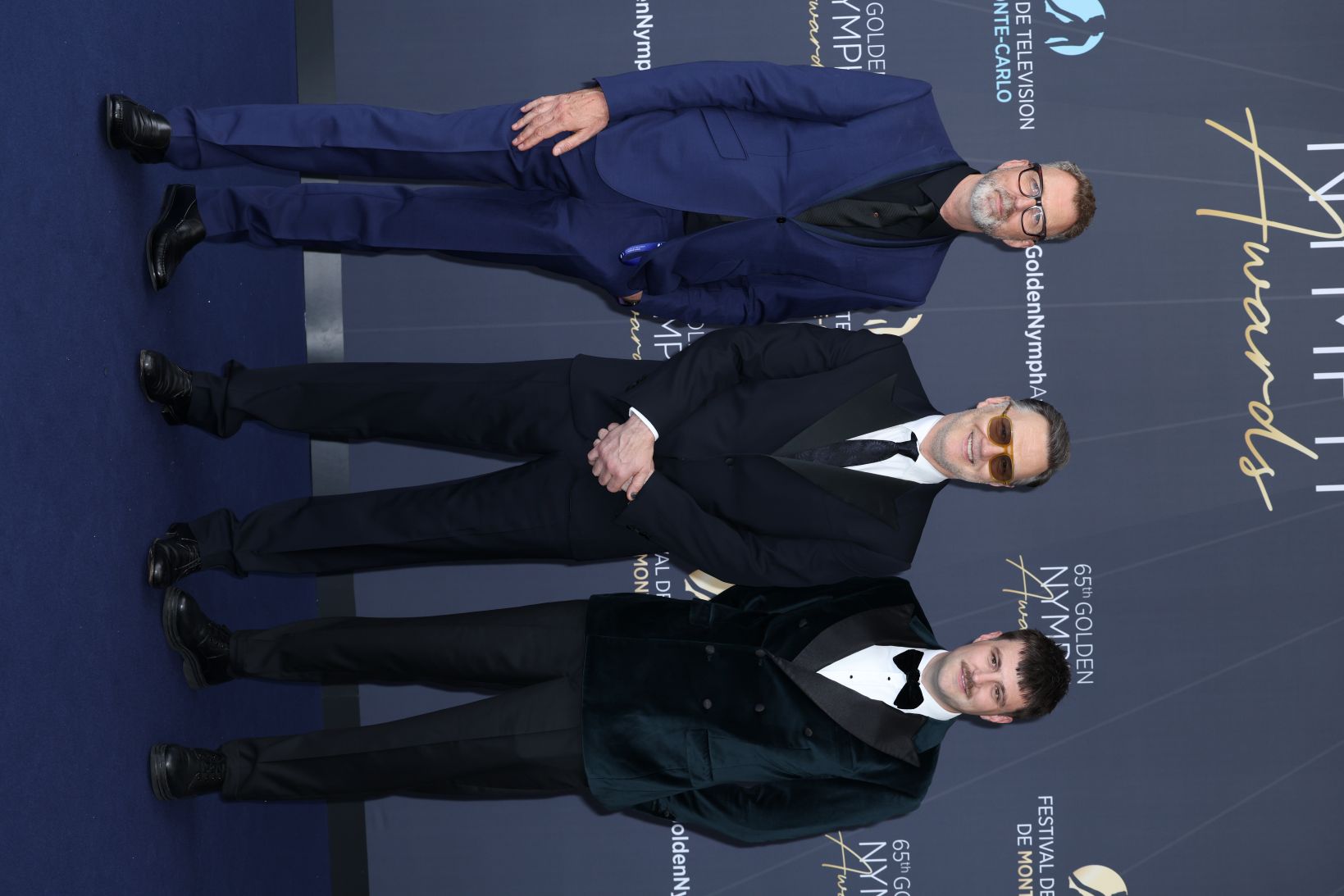
From left to right - Richard Laxton, David Morrissey, Matt Sanford
Produced by New Pictures, written by George Kay and commissioned by ITV, Gone is distributed internationally by All3Media International. On the surface, it follows Detective Annie Cassidy as she investigates the disappearance of the wife of Michael Polley (played by David Morrissey), the respected headmaster of an elite private school. But as the investigation deepens and suspicion increasingly falls on Michael himself, the series becomes less interested in simply answering the question of what happened and more concerned with why people are so eager to decide who deserves sympathy and who deserves blame.
For Matt Sandford, the project evolved from previous collaborations and an encounter with a remarkable real-life story. "We've made a few crime dramas and a few sort of true crime dramas in the past," he explained, recalling how New Pictures had worked with David Morrissey on The Long Shadow, the acclaimed drama about the Yorkshire Ripper investigation. "David Morrissey was in that, and we were always talking about doing another project with him."
The initial inspiration came from a non-fiction book by detective Julia Mackay, who helped solve a decades-old cold case. "There was this non-fiction book about a cold-case murder that was solved after 30 years by an amazing detective called Julia Mackay, from Bath and Bristol, and she's this incredible, tenacious, funny, warm, brilliant detective," Sandford said. Although adapting the true story was considered, the team ultimately chose another route. "We thought, do you know what? We could free ourselves. We could make a fictional detective."
That creative freedom allowed them to build not only Annie Cassidy's character but also Michael Polley, the enigmatic figure at the center of the mystery. "We really wanted an interest, we wanted a theme, a sort of a story to explore which was all about repressed masculinity and buried trauma and buried shame," Sandford said. The setting of an elite private school proved particularly useful in examining those ideas, offering what he described as an environment where codes of behavior and inherited notions of what men should be are passed down through generations.
Richard Laxton admitted that he initially approached the script with some hesitation. "I kind of knew roughly it was a bit genre-y and a bit police-y, and I was a bit like, another one?" he recalled with a smile. But his reservations disappeared as soon as he started reading. "I was completely swept in by the story. In a way that didn't feel formulaic, it didn't feel like I'd read it before or seen it."
What captivated him most was the ambiguity surrounding Michael Polley. "It was this idea of a character who you can't work out if they're guilty or not, but because of a certain way they deal with themselves, you assume they are." Laxton linked that instinct to the way contemporary audiences consume real-life cases. Recalling a highly publicized disappearance in the UK, he observed, "Because her husband was not sobbing on TV and was just totally, as you would be, kind of drained of emotion, we assume he's guilty." It was precisely this tendency to equate visible emotion with innocence that Gone set out to interrogate.
The notion of emotional restraint as a specifically British characteristic also emerged during the discussion. Asked whether Michael's behavior reflected a national trait, Laxton immediately replied, "Stoic, yeah; stiff upper lip." He elaborated: "A lot of it comes from institutions, so if you're a boy, you become a man, and if you're a man, you have to be like this, and you can't be emotional." For him, the challenge was to create a thriller that delivered suspense while remaining rooted in emotional truth. "I didn't want it to be genre, but I wanted it to deliver on genre, but also on heart and emotion, on truth, and have something to say about the world."
David Morrissey echoed that ambition, arguing that the series examines society's expectations of victims and their families. "One of the things about why we wanted to do the show is about people who give bad victim," he said. "When something terrible has happened to someone, the public sort of want them to react in a certain way for themselves. They want to see someone break down when something tragic has happened to them. They want to see someone scream and shout when terrible things have gone on." Michael refuses to perform grief in the expected manner. "Michael doesn't do that and that gives a curve ball to the investigation and to us as a public."
At the same time, Morrissey resisted simplistic explanations. Michael's reserve, he suggested, stems partly from his professional responsibilities. "He's running a big institution. He's got a lot of pupils who are in a very delicate point in their life," he noted. "He takes that responsibility seriously." The resulting tension keeps audiences questioning him throughout the series.
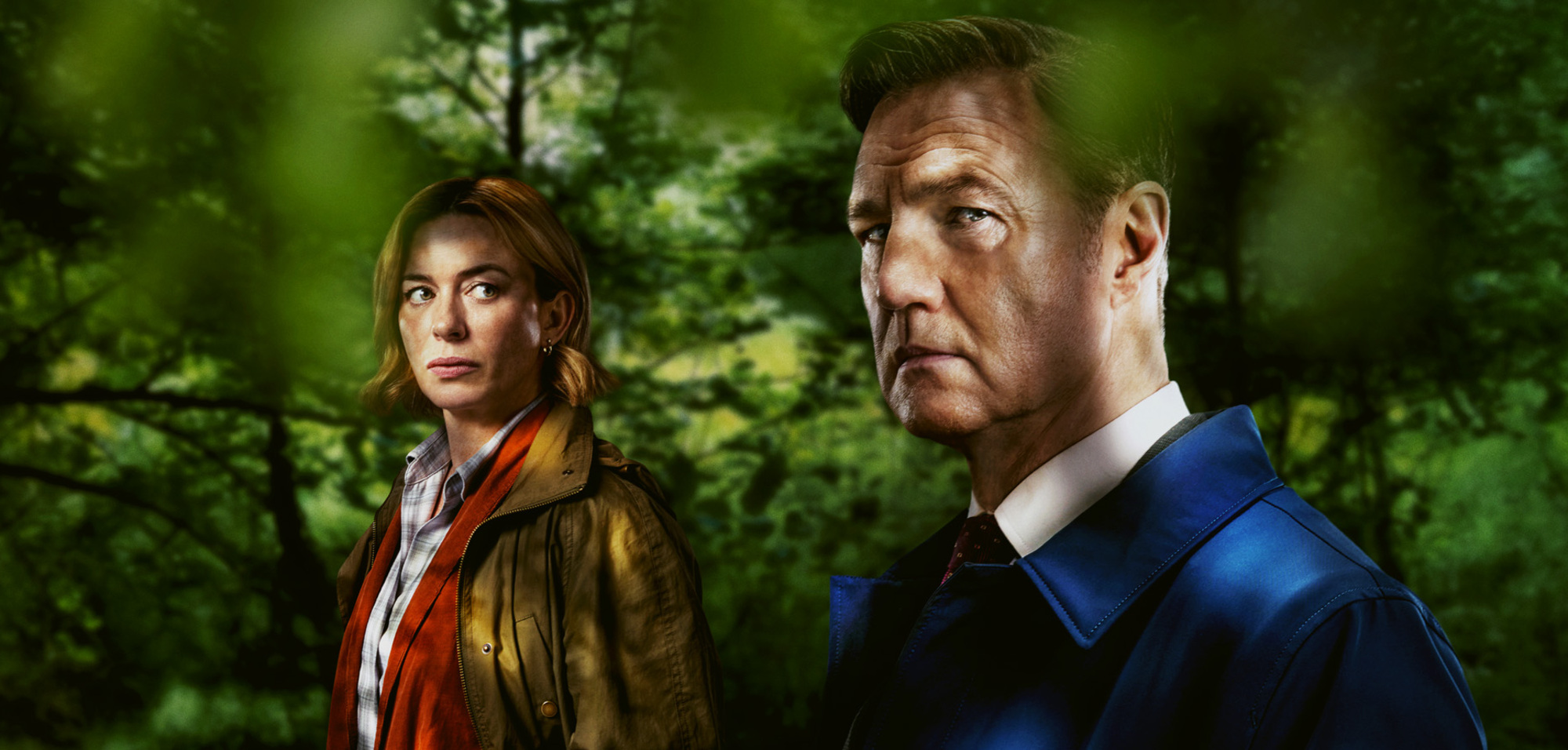
That uncertainty also shapes Michael's relationship with his daughter, one of the drama's emotional pillars. Morrissey described their bond as deeply loving yet profoundly limited. "I would say he absolutely loves her with his whole heart, but he has stunted emotional fluency." As for his daughter's feelings, "I think she loves her father but probably doesn't like him very much." Sandford expanded on this dynamic, explaining that she "loves him but she just doesn't fully know him." The character is forced to confront impossible questions: "Who is my father? Could he be capable of doing this?"
Maintaining that ambiguity proved to be one of the production's greatest creative challenges. Morrissey appreciated knowing where Michael's story was ultimately heading. "It was good that I knew going in what I was heading for," he said. Yet both actor and director spoke of constantly negotiating how much information to reveal. "How much we want to let the audience in and how much we don't," Morrissey explained.
Some of the most revealing moments, he noted, are the quietest. "Scenes like him in his office on his own, in a supermarket on his own, in the car on his own, walking across a field on his own, those moments that were shared only with him and the audience, they were big, insightful times for us." Laxton agreed, arguing that context transforms ordinary actions into objects of suspicion. "You can't trick the audience," he said. Referring to a scene in which Michael takes out the rubbish bins, he remarked, "That moment is, what is happening to my life?" Yet viewers, conditioned by the conventions of thrillers, instinctively search for darker meanings. "You give the audience a certain atmosphere and they do so much storytelling of a thriller."
Although detective stories travel easily across borders, Sandford believes Gone possesses a distinctive identity. "It is a conventional set-up. Somebody goes missing and a detective is called in to investigate," he acknowledged. "But the story we wanted to explore about buried shame and masculinity and that twisted portrait of what a man should be... that felt really interesting to all of us creatively and felt like something that had never been explored before for television." Laxton added that modern audiences are increasingly receptive to universal themes regardless of geography. "We're so used to watching international stories," he said. "This isn't peculiar to the United Kingdom. It's human."
The conversation also touched upon the realities of making ambitious television in today's marketplace. Morrissey spoke candidly about shrinking schedules. "In television you're getting less and less time to do what you want to do," he said. Laxton was equally frank about the financial pressures. "There just isn't enough money to make this," he admitted. "You want to watch an Apple show, we've got to do a show that can compete with Apple, even though we have 25% of their money." Even so, both men made clear that constraints often force filmmakers to rely on ingenuity and experience rather than resources alone.
Laxton was asked what he hoped audiences would carry with them after the final episode. Rather than naming a specific emotion, he spoke about reflection and vulnerability. "I suppose it's a feeling I want people to reflect after it," he said. "The story will touch them differently." Then he arrived at the idea that perhaps best encapsulates Gone as a whole: viewers might "wonder if there's something they can do to their own vulnerability or power of vulnerability."
For all its intrigue, red herrings and unanswered questions, Gone seems determined to challenge audiences in unexpected ways. Beneath the mystery of a missing woman lies an examination of emotional silence, inherited behaviors and the dangerous ease with which people draw conclusions based on how grief is performed
For Matt Sandford, the project evolved from previous collaborations and an encounter with a remarkable real-life story. "We've made a few crime dramas and a few sort of true crime dramas in the past," he explained, recalling how New Pictures had worked with David Morrissey on The Long Shadow, the acclaimed drama about the Yorkshire Ripper investigation. "David Morrissey was in that, and we were always talking about doing another project with him."
The initial inspiration came from a non-fiction book by detective Julia Mackay, who helped solve a decades-old cold case. "There was this non-fiction book about a cold-case murder that was solved after 30 years by an amazing detective called Julia Mackay, from Bath and Bristol, and she's this incredible, tenacious, funny, warm, brilliant detective," Sandford said. Although adapting the true story was considered, the team ultimately chose another route. "We thought, do you know what? We could free ourselves. We could make a fictional detective."
That creative freedom allowed them to build not only Annie Cassidy's character but also Michael Polley, the enigmatic figure at the center of the mystery. "We really wanted an interest, we wanted a theme, a sort of a story to explore which was all about repressed masculinity and buried trauma and buried shame," Sandford said. The setting of an elite private school proved particularly useful in examining those ideas, offering what he described as an environment where codes of behavior and inherited notions of what men should be are passed down through generations.
Richard Laxton admitted that he initially approached the script with some hesitation. "I kind of knew roughly it was a bit genre-y and a bit police-y, and I was a bit like, another one?" he recalled with a smile. But his reservations disappeared as soon as he started reading. "I was completely swept in by the story. In a way that didn't feel formulaic, it didn't feel like I'd read it before or seen it."
What captivated him most was the ambiguity surrounding Michael Polley. "It was this idea of a character who you can't work out if they're guilty or not, but because of a certain way they deal with themselves, you assume they are." Laxton linked that instinct to the way contemporary audiences consume real-life cases. Recalling a highly publicized disappearance in the UK, he observed, "Because her husband was not sobbing on TV and was just totally, as you would be, kind of drained of emotion, we assume he's guilty." It was precisely this tendency to equate visible emotion with innocence that Gone set out to interrogate.
The notion of emotional restraint as a specifically British characteristic also emerged during the discussion. Asked whether Michael's behavior reflected a national trait, Laxton immediately replied, "Stoic, yeah; stiff upper lip." He elaborated: "A lot of it comes from institutions, so if you're a boy, you become a man, and if you're a man, you have to be like this, and you can't be emotional." For him, the challenge was to create a thriller that delivered suspense while remaining rooted in emotional truth. "I didn't want it to be genre, but I wanted it to deliver on genre, but also on heart and emotion, on truth, and have something to say about the world."
David Morrissey echoed that ambition, arguing that the series examines society's expectations of victims and their families. "One of the things about why we wanted to do the show is about people who give bad victim," he said. "When something terrible has happened to someone, the public sort of want them to react in a certain way for themselves. They want to see someone break down when something tragic has happened to them. They want to see someone scream and shout when terrible things have gone on." Michael refuses to perform grief in the expected manner. "Michael doesn't do that and that gives a curve ball to the investigation and to us as a public."
At the same time, Morrissey resisted simplistic explanations. Michael's reserve, he suggested, stems partly from his professional responsibilities. "He's running a big institution. He's got a lot of pupils who are in a very delicate point in their life," he noted. "He takes that responsibility seriously." The resulting tension keeps audiences questioning him throughout the series.
That uncertainty also shapes Michael's relationship with his daughter, one of the drama's emotional pillars. Morrissey described their bond as deeply loving yet profoundly limited. "I would say he absolutely loves her with his whole heart, but he has stunted emotional fluency." As for his daughter's feelings, "I think she loves her father but probably doesn't like him very much." Sandford expanded on this dynamic, explaining that she "loves him but she just doesn't fully know him." The character is forced to confront impossible questions: "Who is my father? Could he be capable of doing this?"
Maintaining that ambiguity proved to be one of the production's greatest creative challenges. Morrissey appreciated knowing where Michael's story was ultimately heading. "It was good that I knew going in what I was heading for," he said. Yet both actor and director spoke of constantly negotiating how much information to reveal. "How much we want to let the audience in and how much we don't," Morrissey explained.
Some of the most revealing moments, he noted, are the quietest. "Scenes like him in his office on his own, in a supermarket on his own, in the car on his own, walking across a field on his own, those moments that were shared only with him and the audience, they were big, insightful times for us." Laxton agreed, arguing that context transforms ordinary actions into objects of suspicion. "You can't trick the audience," he said. Referring to a scene in which Michael takes out the rubbish bins, he remarked, "That moment is, what is happening to my life?" Yet viewers, conditioned by the conventions of thrillers, instinctively search for darker meanings. "You give the audience a certain atmosphere and they do so much storytelling of a thriller."
Although detective stories travel easily across borders, Sandford believes Gone possesses a distinctive identity. "It is a conventional set-up. Somebody goes missing and a detective is called in to investigate," he acknowledged. "But the story we wanted to explore about buried shame and masculinity and that twisted portrait of what a man should be... that felt really interesting to all of us creatively and felt like something that had never been explored before for television." Laxton added that modern audiences are increasingly receptive to universal themes regardless of geography. "We're so used to watching international stories," he said. "This isn't peculiar to the United Kingdom. It's human."
The conversation also touched upon the realities of making ambitious television in today's marketplace. Morrissey spoke candidly about shrinking schedules. "In television you're getting less and less time to do what you want to do," he said. Laxton was equally frank about the financial pressures. "There just isn't enough money to make this," he admitted. "You want to watch an Apple show, we've got to do a show that can compete with Apple, even though we have 25% of their money." Even so, both men made clear that constraints often force filmmakers to rely on ingenuity and experience rather than resources alone.
Laxton was asked what he hoped audiences would carry with them after the final episode. Rather than naming a specific emotion, he spoke about reflection and vulnerability. "I suppose it's a feeling I want people to reflect after it," he said. "The story will touch them differently." Then he arrived at the idea that perhaps best encapsulates Gone as a whole: viewers might "wonder if there's something they can do to their own vulnerability or power of vulnerability."
For all its intrigue, red herrings and unanswered questions, Gone seems determined to challenge audiences in unexpected ways. Beneath the mystery of a missing woman lies an examination of emotional silence, inherited behaviors and the dangerous ease with which people draw conclusions based on how grief is performed