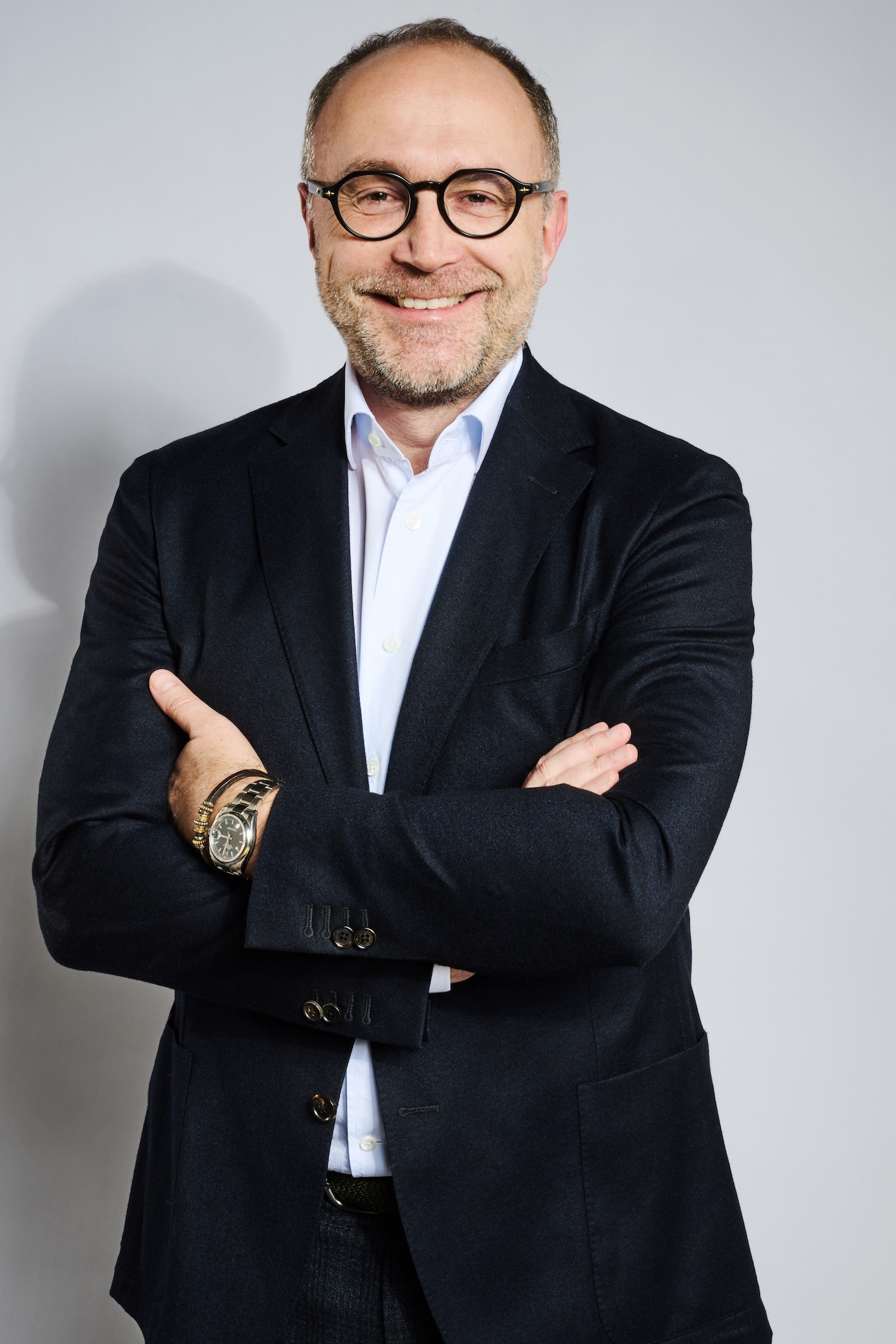

From local hits to international appeal: Dramedy’s next chapter with Filip Bobinski
Filip Bobinski, CEO of Dramedy, is steering the Czech-based production company into a new era with the launch of its own studio complex in Prague, featuring three stages designed for high-volume television fiction and entertainment. With this investment, Dramedy aims to fill a critical gap in the CEE production ecosystem by providing modern, mid-sized facilities tailored to series, returning formats, and multi-genre productions, while offering flexibility, cost efficiency, and proximity to the city center for talent and live audiences.
In this interview with CEETV's Yako Molhov, Bobinski also highlights the company’s growing international ambitions, emphasizing projects developed with cross-border appeal from the outset, long-term broadcaster partnerships, and a producer-led approach that positions Dramedy as a key player in both Czechia and the wider European scripted market.
In this interview with CEETV's Yako Molhov, Bobinski also highlights the company’s growing international ambitions, emphasizing projects developed with cross-border appeal from the outset, long-term broadcaster partnerships, and a producer-led approach that positions Dramedy as a key player in both Czechia and the wider European scripted market.
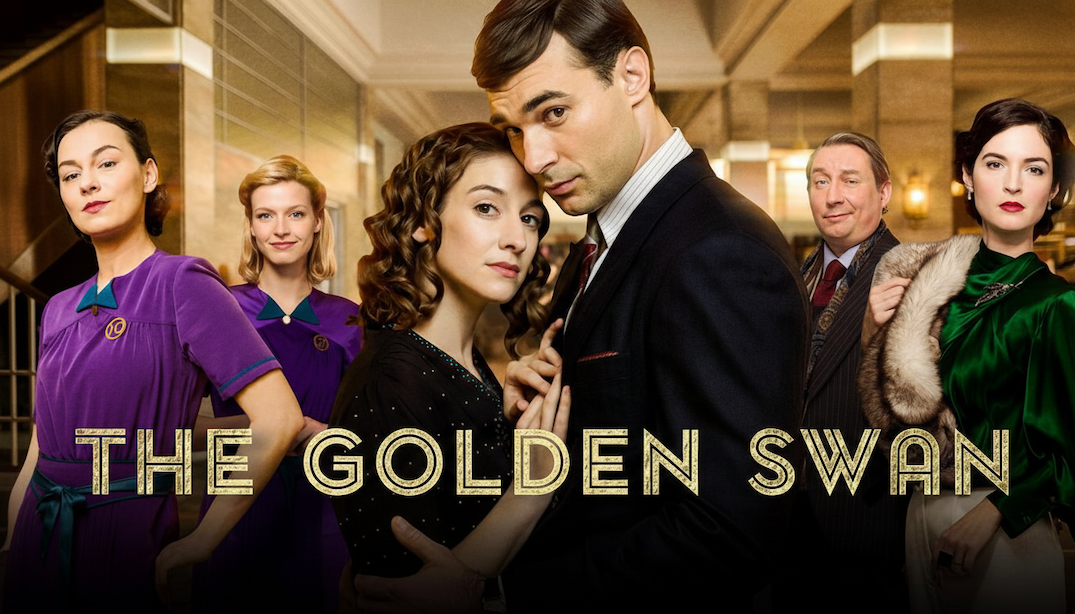
The Golden Swan
Filip, Dramedy has recently launched and expanded its own studio facility with three stages in Prague. What strategic gap in the Czech and wider CEE production ecosystem were you aiming to fill with this investment, and how does the studio change the way you develop and package projects?
We set out to create modern, mid-sized studio facilities tailored to the real needs of high-volume television fiction and entertainment production. Prague has some large facilities geared toward big international films, but fewer spaces designed for regular series, returning formats, and multi-genre TV production. While we can host film projects when appropriate, our focus is on reliability, solid infrastructure, and good value for money.
We are close to the city center, in a neighborhood that is developing and pleasant, not purely industrial. That makes it attractive for talent and crews, as well as for audience-based formats — for example, shows where the public attends recordings and can easily arrive by public transport.
Content production is inherently cyclical, with peak and slower periods, and owning studio infrastructure helps Dramedy balance those cycles. At the same time, it gives us priority and flexibility when producing long-running series, which creates an advantage in scheduling and cost control.
Czech drama has become more visible internationally. From your perspective, what makes Czech series travel today, and how consciously do you develop projects with cross-border appeal from the outset?
It is certainly more visible, but I would still say it is just the beginning. A generation of writers and directors who have honed their craft over the past two decades in domestic television is now ready to step into more ambitious international projects.
What is equally important is that the market has evolved. Domestic broadcasters and streamers are increasingly prepared to participate in projects financed from multiple sources, which allows us to create content that also needs to perform beyond the local market.
We have already seen Czech period dramas, crime series and event series travel successfully. Each producer approaches this differently. In Dramedy, some of our new series are primarily developed for the domestic audience, but executed at a level that makes them attractive for selected international sales. At the same time, we are developing projects that are international from the outset — in their themes, structure and financing partnerships — while still rooted in local stories. We try to combine regional identity with universal dramatic themes.
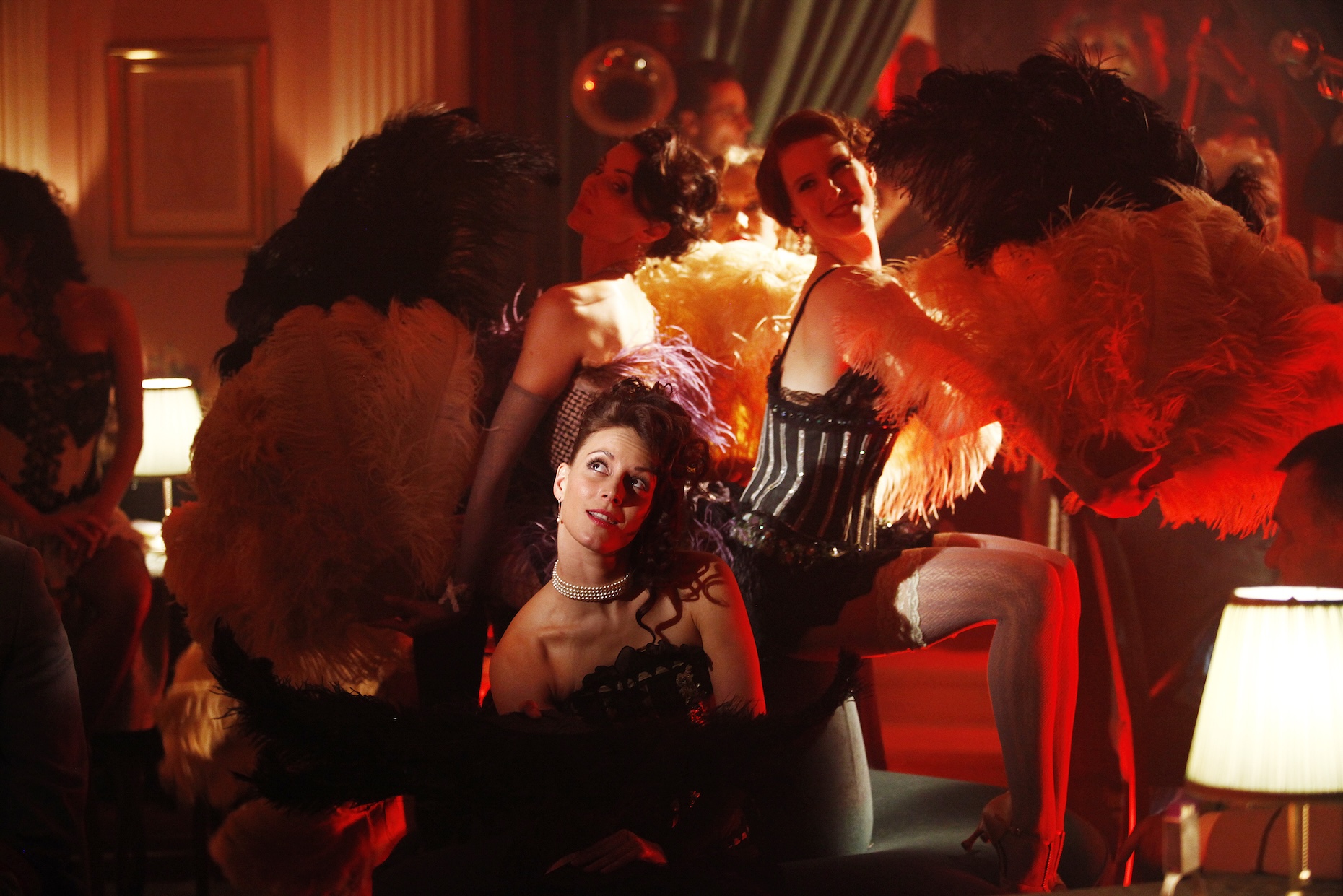
Having produced more than 300 hours of primetime fiction, how has your showrunner approach evolved in recent years, particularly when balancing broadcaster demands with increasingly international storytelling ambitions?
I would say that when you come to a broadcaster with a project that has ambitions beyond the local audience, you should not expect it to be fully financed by them. That naturally changes the dynamics, because if you bring in additional financing, it gives you more room to defend certain creative decisions that may be important for the international potential of the project.
At the same time, it has to remain a win-win relationship. The broadcaster receives a stronger product — often with higher production value and broader appeal — which can help attract new audiences, while still investing at a level comparable to a domestic show. As a showrunner, it means thinking about the international positioning of the project from the beginning, but in most cases it still has to remain an authentic local show. You also need to choose the right topic — not every story needs to travel. Sometimes it is better to focus purely on the local audience, financed as a local show, and even in that case you can create a high-quality series that may later find its way internationally.
Dramedy continues to work closely with CME and Czech Television, while also engaging with other partners, namely Prima recently launched your first production for them - Polabi. How important is long-term broadcaster relationships today, compared to project-by-project financing?
I see the success of the audiovisual industry as strongly dependent on continuity. Talent, producers and broadcasters need to learn from previous collaborations and build on them. It is not only about a single, exceptional project, but about long-term cooperation that steadily improves quality and delivers stable success with viewers. From this continuity, something truly exceptional can occasionally grow.
Long-term relationships are indeed empowering, as you understand what works for a broadcaster, what their priorities are and how they position themselves in the market. However, at the same time, independent development thinking is essential if you want to bring fresh ideas that are not limited by a broadcaster’s daily routine. You simply need both — stability and creative freedom — to make it work long term.
Dramedy has experience both as a lead producer and as a co-production or service partner. What are the most realistic and productive co-production models for CEE producers today, and where do you see the biggest mismatches in expectations?
If you aim to co-produce, you first have to define a project that brings real value to all the parties involved. It has to make sense for viewers in all participating countries, and the financial participation of each partner should reflect the realistic audience potential in their market.
It always depends on the particular project, but in general I would try to offer minority partners something they would have to pay significantly more for if they produced it locally — while still making it relevant and attractive for their audience. In most cases, it does not work to think about co-production as simply the sum of what each broadcaster would normally invest in a purely local show produced in-house.
Creatively, the story should have organic roots in all co-producing territories. That requires showrunners, producers and writers to genuinely understand the environment, cultural and social background of the partner country, as well as how local audiences may perceive the topic.
You have been recently re-elected as a board member of CEPI and you are closely involved in European-level policy discussions. What are the most urgent challenges facing independent producers in Europe right now, and how do these debates translate into day-to-day production reality in CEE?
The new Convention on the Co-Production of Audiovisual Works in the Form of Series creates a clear European legal framework specifically designed for serialized projects. For CEE markets, clearer rules at the European level can make it easier to structure and finance cross-border series in the future.
At the same time, there are serious debates around access to public funding and the definition of independent producers. There is pressure to open support schemes to broadcasters or vertically integrated groups. From a producer’s perspective, this can unbalance the ecosystem and significantly weaken the independent sector.
We are also closely following the debate on the AVMSD Directive and investment obligations for streamers. For producers, especially in CEE, more predictable demand would significantly help ensure continuity and long-term stability in the industry.
Unfortunately, we observe growing pressure on public broadcasters across Europe. While there might be some room for greater efficiency and reform, they remain key investors in original content. If their position weakens, the range of content shrinks — which directly affects what producers can develop and finance.
Czechia recently updated its audiovisual legislation. From a producer’s perspective, how have these changes impacted project financing, local content obligations, and your overall strategy for both domestic and international productions?
Public support schemes have opened to serialized productions. This reflects the reality that many high-quality stories today are told in formats other than feature films. The system also strengthens the position of independent producers in accessing public funds, which supports more balanced collaboration between broadcasters or streamers and production companies.
For Dramedy, it means we can develop more ambitious, higher-budget projects based on combined financing and co-productions. Broadcasters can commit at the level of their local programme window, while we structure the additional financing needed to bring the project to a higher scale. That is the practical added value we can offer, alongside creativity and talent.

The CEE region is often described as “emerging” despite decades of production history. From your experience, what structural issues still prevent CEE producers from playing a stronger role as equal partners in international co-productions?
CEE producers have historically been perceived more as service providers than as content creators or content (co-)owners — often in the role of securing financing for projects creatively driven by directors and other talent.
True producing is about identifying strong themes and stories and translating them into screen language that connects with viewers — and sells. It requires understanding the market, anticipating audience behaviour, and providing creative leadership in close collaboration with showrunners, writers, directors and production designers. It is about defining the product before it is actually produced.
This kind of producer-led development model was not always fully understood or structurally supported — including by broadcasters. Limited margins, limited IP retention and a lack of continuity in demand made it difficult to reinvest in development capacity. As a result, many companies remained project-driven rather than development-driven, and were not able to systematically build and own IP.
CEE producers need to act first and foremost as entrepreneurs in the audiovisual sector — and many are already doing so.
With international platforms reassessing their local content strategies, how do you see the future of high-end scripted production in Czechia and CEE over the next three to five years?
I do not expect any radical shift in the activity of international platforms in Czechia in the short term. However, their engagement may gradually increase — particularly through co-productions and co-financing rather than fully commissioned originals. Ultimately, it will depend on the quality and consistency of the projects coming from the region. There is still significant room for improvement in development culture and script discipline. The region has talent, but international positioning requires systematic work, long-term investment and creative discipline.
With new projects in production for Prima and beyond, what excites you most about Dramedy’s next chapter, and where do you see the company positioning itself within the European scripted landscape?
We have several projects in advanced development that have already attracted interest from international partners. With these projects and others currently in development, I believe Dramedy will position itself not only as a strong and reliable partner in the Czech market, but also as one of the leading independent producers in CEE, with growing visibility across Europe.
We set out to create modern, mid-sized studio facilities tailored to the real needs of high-volume television fiction and entertainment production. Prague has some large facilities geared toward big international films, but fewer spaces designed for regular series, returning formats, and multi-genre TV production. While we can host film projects when appropriate, our focus is on reliability, solid infrastructure, and good value for money.
We are close to the city center, in a neighborhood that is developing and pleasant, not purely industrial. That makes it attractive for talent and crews, as well as for audience-based formats — for example, shows where the public attends recordings and can easily arrive by public transport.
Content production is inherently cyclical, with peak and slower periods, and owning studio infrastructure helps Dramedy balance those cycles. At the same time, it gives us priority and flexibility when producing long-running series, which creates an advantage in scheduling and cost control.
Czech drama has become more visible internationally. From your perspective, what makes Czech series travel today, and how consciously do you develop projects with cross-border appeal from the outset?
It is certainly more visible, but I would still say it is just the beginning. A generation of writers and directors who have honed their craft over the past two decades in domestic television is now ready to step into more ambitious international projects.
What is equally important is that the market has evolved. Domestic broadcasters and streamers are increasingly prepared to participate in projects financed from multiple sources, which allows us to create content that also needs to perform beyond the local market.
We have already seen Czech period dramas, crime series and event series travel successfully. Each producer approaches this differently. In Dramedy, some of our new series are primarily developed for the domestic audience, but executed at a level that makes them attractive for selected international sales. At the same time, we are developing projects that are international from the outset — in their themes, structure and financing partnerships — while still rooted in local stories. We try to combine regional identity with universal dramatic themes.
The Manor House
Having produced more than 300 hours of primetime fiction, how has your showrunner approach evolved in recent years, particularly when balancing broadcaster demands with increasingly international storytelling ambitions?
I would say that when you come to a broadcaster with a project that has ambitions beyond the local audience, you should not expect it to be fully financed by them. That naturally changes the dynamics, because if you bring in additional financing, it gives you more room to defend certain creative decisions that may be important for the international potential of the project.
At the same time, it has to remain a win-win relationship. The broadcaster receives a stronger product — often with higher production value and broader appeal — which can help attract new audiences, while still investing at a level comparable to a domestic show. As a showrunner, it means thinking about the international positioning of the project from the beginning, but in most cases it still has to remain an authentic local show. You also need to choose the right topic — not every story needs to travel. Sometimes it is better to focus purely on the local audience, financed as a local show, and even in that case you can create a high-quality series that may later find its way internationally.
Dramedy continues to work closely with CME and Czech Television, while also engaging with other partners, namely Prima recently launched your first production for them - Polabi. How important is long-term broadcaster relationships today, compared to project-by-project financing?
I see the success of the audiovisual industry as strongly dependent on continuity. Talent, producers and broadcasters need to learn from previous collaborations and build on them. It is not only about a single, exceptional project, but about long-term cooperation that steadily improves quality and delivers stable success with viewers. From this continuity, something truly exceptional can occasionally grow.
Long-term relationships are indeed empowering, as you understand what works for a broadcaster, what their priorities are and how they position themselves in the market. However, at the same time, independent development thinking is essential if you want to bring fresh ideas that are not limited by a broadcaster’s daily routine. You simply need both — stability and creative freedom — to make it work long term.
Dramedy has experience both as a lead producer and as a co-production or service partner. What are the most realistic and productive co-production models for CEE producers today, and where do you see the biggest mismatches in expectations?
If you aim to co-produce, you first have to define a project that brings real value to all the parties involved. It has to make sense for viewers in all participating countries, and the financial participation of each partner should reflect the realistic audience potential in their market.
It always depends on the particular project, but in general I would try to offer minority partners something they would have to pay significantly more for if they produced it locally — while still making it relevant and attractive for their audience. In most cases, it does not work to think about co-production as simply the sum of what each broadcaster would normally invest in a purely local show produced in-house.
Creatively, the story should have organic roots in all co-producing territories. That requires showrunners, producers and writers to genuinely understand the environment, cultural and social background of the partner country, as well as how local audiences may perceive the topic.
Wonderful Times
You have been recently re-elected as a board member of CEPI and you are closely involved in European-level policy discussions. What are the most urgent challenges facing independent producers in Europe right now, and how do these debates translate into day-to-day production reality in CEE?
The new Convention on the Co-Production of Audiovisual Works in the Form of Series creates a clear European legal framework specifically designed for serialized projects. For CEE markets, clearer rules at the European level can make it easier to structure and finance cross-border series in the future.
At the same time, there are serious debates around access to public funding and the definition of independent producers. There is pressure to open support schemes to broadcasters or vertically integrated groups. From a producer’s perspective, this can unbalance the ecosystem and significantly weaken the independent sector.
We are also closely following the debate on the AVMSD Directive and investment obligations for streamers. For producers, especially in CEE, more predictable demand would significantly help ensure continuity and long-term stability in the industry.
Unfortunately, we observe growing pressure on public broadcasters across Europe. While there might be some room for greater efficiency and reform, they remain key investors in original content. If their position weakens, the range of content shrinks — which directly affects what producers can develop and finance.
Czechia recently updated its audiovisual legislation. From a producer’s perspective, how have these changes impacted project financing, local content obligations, and your overall strategy for both domestic and international productions?
Public support schemes have opened to serialized productions. This reflects the reality that many high-quality stories today are told in formats other than feature films. The system also strengthens the position of independent producers in accessing public funds, which supports more balanced collaboration between broadcasters or streamers and production companies.
For Dramedy, it means we can develop more ambitious, higher-budget projects based on combined financing and co-productions. Broadcasters can commit at the level of their local programme window, while we structure the additional financing needed to bring the project to a higher scale. That is the practical added value we can offer, alongside creativity and talent.
I Will Be Fine
The CEE region is often described as “emerging” despite decades of production history. From your experience, what structural issues still prevent CEE producers from playing a stronger role as equal partners in international co-productions?
CEE producers have historically been perceived more as service providers than as content creators or content (co-)owners — often in the role of securing financing for projects creatively driven by directors and other talent.
True producing is about identifying strong themes and stories and translating them into screen language that connects with viewers — and sells. It requires understanding the market, anticipating audience behaviour, and providing creative leadership in close collaboration with showrunners, writers, directors and production designers. It is about defining the product before it is actually produced.
This kind of producer-led development model was not always fully understood or structurally supported — including by broadcasters. Limited margins, limited IP retention and a lack of continuity in demand made it difficult to reinvest in development capacity. As a result, many companies remained project-driven rather than development-driven, and were not able to systematically build and own IP.
CEE producers need to act first and foremost as entrepreneurs in the audiovisual sector — and many are already doing so.
With international platforms reassessing their local content strategies, how do you see the future of high-end scripted production in Czechia and CEE over the next three to five years?
I do not expect any radical shift in the activity of international platforms in Czechia in the short term. However, their engagement may gradually increase — particularly through co-productions and co-financing rather than fully commissioned originals. Ultimately, it will depend on the quality and consistency of the projects coming from the region. There is still significant room for improvement in development culture and script discipline. The region has talent, but international positioning requires systematic work, long-term investment and creative discipline.
With new projects in production for Prima and beyond, what excites you most about Dramedy’s next chapter, and where do you see the company positioning itself within the European scripted landscape?
We have several projects in advanced development that have already attracted interest from international partners. With these projects and others currently in development, I believe Dramedy will position itself not only as a strong and reliable partner in the Czech market, but also as one of the leading independent producers in CEE, with growing visibility across Europe.