

Dead City explores hope, immigration and humanity as The Walking Dead evolves
The lead cast and creative team behind The Walking Dead: Dead City used their appearance at the 65th Monte-Carlo Television Festival to discuss how the franchise is evolving beyond survival and violence, with Season 3 tackling themes of immigration, community, hope and even the humanity of walkers.
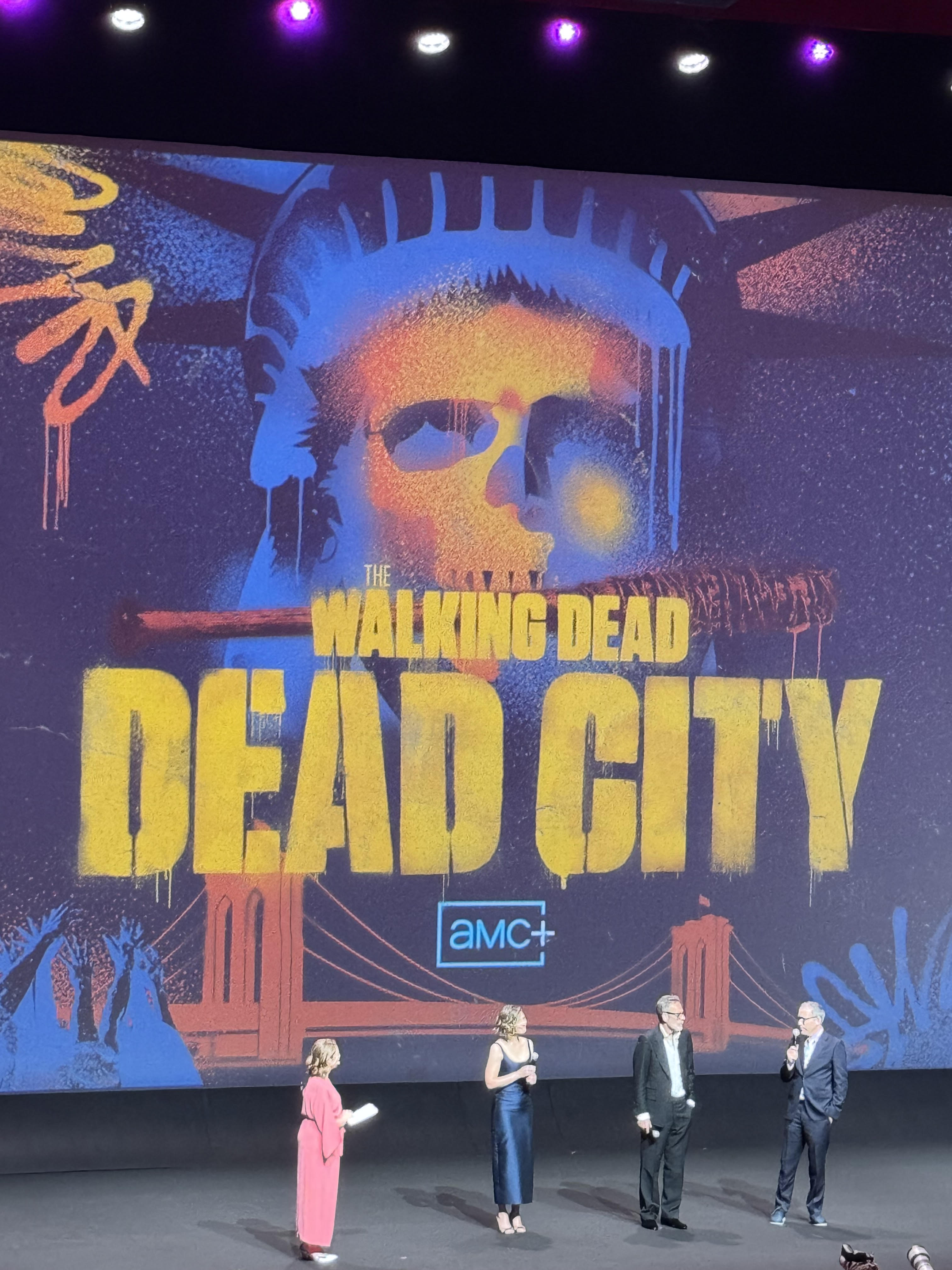
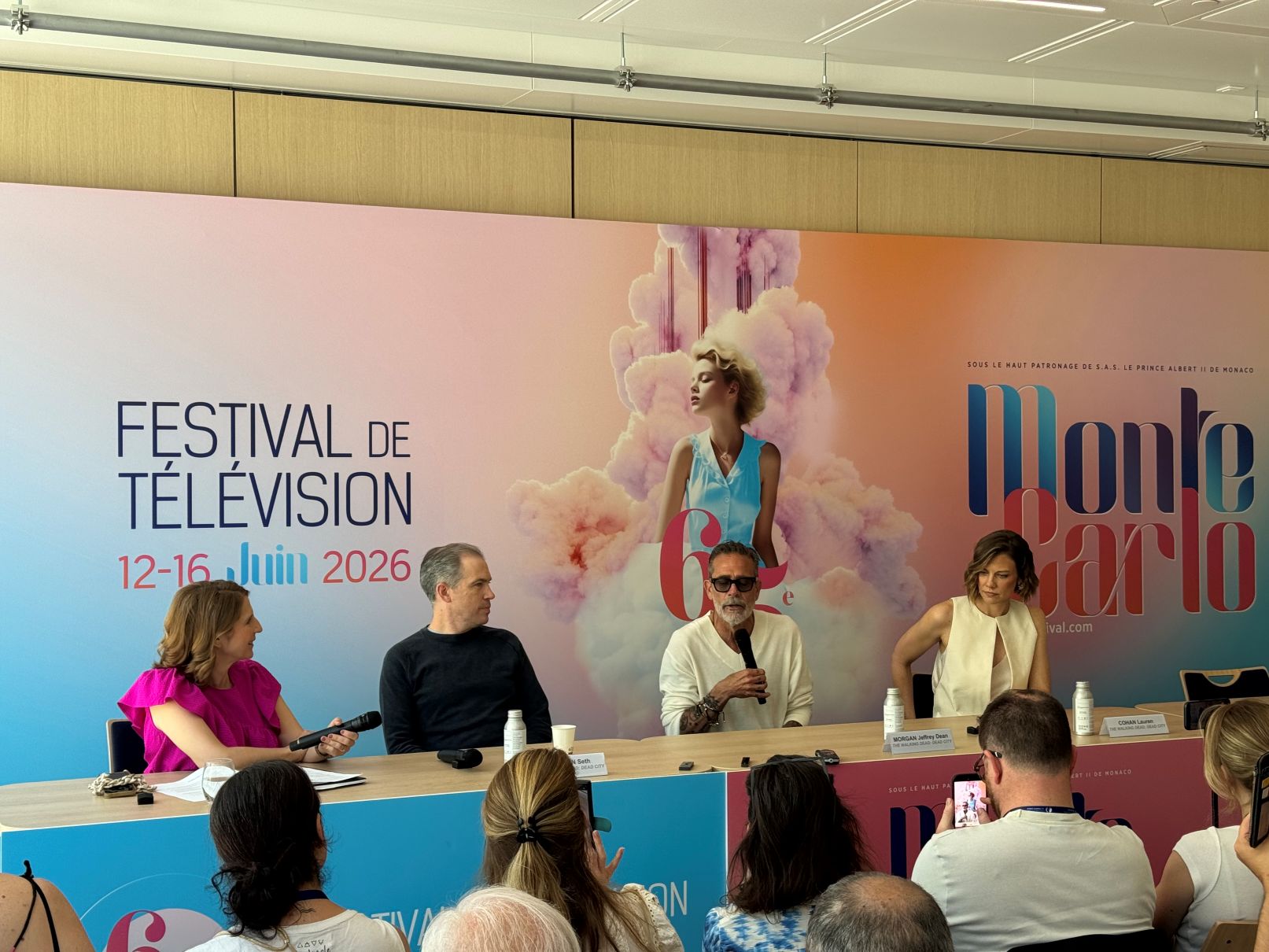
During a press conference at the Festival which opened yesterday with the international premiere of the first two episodes of the third season of the series, showrunner Seth Hoffman, alongside stars Jeffrey Dean Morgan and Lauren Cohan, described the new season as one that pushes the boundaries of the long-running zombie universe while remaining faithful to the values that made the original series a global phenomenon.
For Morgan, the biggest change is the continuing evolution of Negan. Introduced more than a decade ago as one of television’s most notorious villains, the character has steadily gained new dimensions. “There always will be that person that walked out of the trailer 11 years ago,” Morgan said. “But he's more three-dimensional now. We've added layers through the years. And I think that this year in particular, there's such a shift in Maggie and Negan's relationship that it brings yet another side of Negan.”
The actor believes Season 3 delivers the most significant shift yet because of the changing dynamic between Negan and Maggie. “Who would do a series with two enemies, two people that want to kill each other? And yet, here we are. Season 3 about to come out. This is our best season thus far of this spinoff, I think, by far, because it is such a different relationship now.”
That transformation was a central topic throughout the press conference. After years defined by grief, revenge and mistrust, Maggie and Negan are beginning to discover a new purpose together. Cohan explained that Maggie finally realizes she can no longer be defined by the trauma that has driven her for so long. “This is really the first year that Maggie really recognizes that to be defined by grief and to operate from a place of grief doesn't serve her anymore. I think there was a big awakening at the end of Season 2 with my son that I knew something had to change in a way that was incredibly uncomfortable. ” she said.
Their unlikely alliance remains one of the most fascinating relationships in the franchise. “There’s nowhere further that you could go than to go from that to what Jeffrey and I have had the pleasure of playing this season,” Cohan said. “Unlikely allies that realize how much they can rely on each other, can trust each other, know each other.”
Morgan added that after years of hostility, the characters have finally recognized that survival depends on each other. “For these characters to realize, to survive, that they need each other was a big revelation. And then to do that with a bit of a sense of humor at times as well...Just seeing Maggie smile I think is so nice. I haven't seen her smile in 10 years. And it was kind of a revelation.”
One of the most talked-about elements of the new season is an alternate-reality episode that imagines a world where the zombie apocalypse never happened. Hoffman revealed that the concept was among the first ideas he developed while building the season. “I thought there's one thing that fans would want to see in this spinoff — characters that maybe we haven't seen for a long time,” he explained. The episode allows viewers to compare who Maggie and Negan became in the apocalypse with who they might have been in a normal world. “Despite the terrible trauma, the awful things they've done, the awful things that have been done to them, you get to ask the question: are these people better off having gone through the zombie apocalypse than they would have been if they hadn't?”
The discussion also turned to the strong symbolism of the Statue of Liberty, which features prominently in the opening episodes of Season 3. Asked about the show's relevance to contemporary America, Hoffman acknowledged that the story intentionally engages with questions surrounding immigration and inclusion. In the new season, Maggie initially fears that newcomers could threaten her community. Over time, she begins to understand that welcoming outsiders can strengthen society rather than weaken it. “Bringing people into a community brings it life, brings it success,” Hoffman said. “There's an ultimate net positive for being welcoming, for being inclusive.”
The debate continues throughout the season, reflecting conversations taking place in the real world. “We are aware that not everyone in the United States necessarily has that idea that bringing more people into our community is what we should be doing,” Hoffman said. “This season, moving forward, is going to ask that question.”
Cohan connected the imagery of the Statue of Liberty to both American history and the larger themes of the franchise. “What makes me so proud, partly of the United States, is how you prove your mettle is defined so differently than it is in a lot of other countries,” she said. “It's a parallel that I find in The Walking Dead and in the apocalypse.” She argued that hope remains at the heart of the story, particularly through the idea of building a future for the next generation. “What is there for our kids if we don't invite people in, and if we don't create something bigger than ourselves?”
Hoffman later confirmed that immigration is one of several contemporary issues explored throughout the season. “This is literally a season that is about immigration,” he said. “This is a world where people are afraid of other people, and in this season we absolutely are asking the question: do you need to be afraid of other people?” The showrunner emphasized that the series does not seek to provide simple answers but rather encourage viewers to reflect on current social debates through the lens of a post-apocalyptic world.
Beyond politics and relationships, Season 3 also ventures into unexplored territory by focusing on the walkers themselves. “One of the things that we're intentionally doing this year is we're exploring the humanity of the walkers,” Hoffman revealed. The season introduces recurring walkers with recognizable traits and personalities, part of a broader effort to make the series feel both familiar and fresh. “We want people to feel like, yeah, this is definitely The Walking Dead, but we also want them to feel like this is brand new.”
Another fan favorite discussed in Monte-Carlo was Lucille, Negan’s iconic baseball bat. Although the current version is slightly different from previous seasons and no longer electrified after the batteries died, Morgan admitted the prop remains central to his performance. “Lucille is kind of Lucille, and it's the only prop I've ever had as an actor that I really loved,” he said. “There's something about just resting her on my shoulder that changes my posture and the way I talk. It has become a big help in me becoming Negan because I am not really Negan...”
Hoffman also offered a rare insight into his approach as a showrunner, explaining that he prefers to build stories around what production can realistically achieve rather than forcing ambitious ideas onto the crew. Recalling an early lesson he learned while working on Prison Break, Hoffman said he was taught never to ignore warnings from line producers when they say something cannot be done. “The way I work is I talk to the producer Colin Walsh, who's incredible, and from the very early stages, try to figure out what's possible and then write back,” he said. The collaborative approach helped shape some of Season 3's biggest set pieces, including a sequence inside a Broadway theater inspired by The Phantom of the Opera. Hoffman said the goal is to maximize the show's impact despite a different budget than the original series, ensuring viewers never feel the limitations behind the scenes. “We're really putting the money where it counts,” he said, while finding creative ways to make Dead City feel as ambitious as ever.
As the franchise enters its third decade, the Monte-Carlo discussion demonstrated that Dead City is increasingly interested in questions beyond survival. Immigration, community, loneliness, hope, identity and the possibility of rebuilding society all sit at the heart of Season 3, while the relationship between Maggie and Negan continues to evolve in ways few fans could have imagined when they first met. For Hoffman, that balance between tradition and reinvention is exactly what keeps The Walking Dead alive.
“There are lots of things about the world today that we're exploring in Season 3,” he said. “This is a show that wants, after watching it, to consider the present-day world.”
For Morgan, the biggest change is the continuing evolution of Negan. Introduced more than a decade ago as one of television’s most notorious villains, the character has steadily gained new dimensions. “There always will be that person that walked out of the trailer 11 years ago,” Morgan said. “But he's more three-dimensional now. We've added layers through the years. And I think that this year in particular, there's such a shift in Maggie and Negan's relationship that it brings yet another side of Negan.”
The actor believes Season 3 delivers the most significant shift yet because of the changing dynamic between Negan and Maggie. “Who would do a series with two enemies, two people that want to kill each other? And yet, here we are. Season 3 about to come out. This is our best season thus far of this spinoff, I think, by far, because it is such a different relationship now.”
That transformation was a central topic throughout the press conference. After years defined by grief, revenge and mistrust, Maggie and Negan are beginning to discover a new purpose together. Cohan explained that Maggie finally realizes she can no longer be defined by the trauma that has driven her for so long. “This is really the first year that Maggie really recognizes that to be defined by grief and to operate from a place of grief doesn't serve her anymore. I think there was a big awakening at the end of Season 2 with my son that I knew something had to change in a way that was incredibly uncomfortable. ” she said.
Their unlikely alliance remains one of the most fascinating relationships in the franchise. “There’s nowhere further that you could go than to go from that to what Jeffrey and I have had the pleasure of playing this season,” Cohan said. “Unlikely allies that realize how much they can rely on each other, can trust each other, know each other.”
Morgan added that after years of hostility, the characters have finally recognized that survival depends on each other. “For these characters to realize, to survive, that they need each other was a big revelation. And then to do that with a bit of a sense of humor at times as well...Just seeing Maggie smile I think is so nice. I haven't seen her smile in 10 years. And it was kind of a revelation.”
One of the most talked-about elements of the new season is an alternate-reality episode that imagines a world where the zombie apocalypse never happened. Hoffman revealed that the concept was among the first ideas he developed while building the season. “I thought there's one thing that fans would want to see in this spinoff — characters that maybe we haven't seen for a long time,” he explained. The episode allows viewers to compare who Maggie and Negan became in the apocalypse with who they might have been in a normal world. “Despite the terrible trauma, the awful things they've done, the awful things that have been done to them, you get to ask the question: are these people better off having gone through the zombie apocalypse than they would have been if they hadn't?”
The discussion also turned to the strong symbolism of the Statue of Liberty, which features prominently in the opening episodes of Season 3. Asked about the show's relevance to contemporary America, Hoffman acknowledged that the story intentionally engages with questions surrounding immigration and inclusion. In the new season, Maggie initially fears that newcomers could threaten her community. Over time, she begins to understand that welcoming outsiders can strengthen society rather than weaken it. “Bringing people into a community brings it life, brings it success,” Hoffman said. “There's an ultimate net positive for being welcoming, for being inclusive.”
The debate continues throughout the season, reflecting conversations taking place in the real world. “We are aware that not everyone in the United States necessarily has that idea that bringing more people into our community is what we should be doing,” Hoffman said. “This season, moving forward, is going to ask that question.”
Cohan connected the imagery of the Statue of Liberty to both American history and the larger themes of the franchise. “What makes me so proud, partly of the United States, is how you prove your mettle is defined so differently than it is in a lot of other countries,” she said. “It's a parallel that I find in The Walking Dead and in the apocalypse.” She argued that hope remains at the heart of the story, particularly through the idea of building a future for the next generation. “What is there for our kids if we don't invite people in, and if we don't create something bigger than ourselves?”
Hoffman later confirmed that immigration is one of several contemporary issues explored throughout the season. “This is literally a season that is about immigration,” he said. “This is a world where people are afraid of other people, and in this season we absolutely are asking the question: do you need to be afraid of other people?” The showrunner emphasized that the series does not seek to provide simple answers but rather encourage viewers to reflect on current social debates through the lens of a post-apocalyptic world.
Beyond politics and relationships, Season 3 also ventures into unexplored territory by focusing on the walkers themselves. “One of the things that we're intentionally doing this year is we're exploring the humanity of the walkers,” Hoffman revealed. The season introduces recurring walkers with recognizable traits and personalities, part of a broader effort to make the series feel both familiar and fresh. “We want people to feel like, yeah, this is definitely The Walking Dead, but we also want them to feel like this is brand new.”
Another fan favorite discussed in Monte-Carlo was Lucille, Negan’s iconic baseball bat. Although the current version is slightly different from previous seasons and no longer electrified after the batteries died, Morgan admitted the prop remains central to his performance. “Lucille is kind of Lucille, and it's the only prop I've ever had as an actor that I really loved,” he said. “There's something about just resting her on my shoulder that changes my posture and the way I talk. It has become a big help in me becoming Negan because I am not really Negan...”
Hoffman also offered a rare insight into his approach as a showrunner, explaining that he prefers to build stories around what production can realistically achieve rather than forcing ambitious ideas onto the crew. Recalling an early lesson he learned while working on Prison Break, Hoffman said he was taught never to ignore warnings from line producers when they say something cannot be done. “The way I work is I talk to the producer Colin Walsh, who's incredible, and from the very early stages, try to figure out what's possible and then write back,” he said. The collaborative approach helped shape some of Season 3's biggest set pieces, including a sequence inside a Broadway theater inspired by The Phantom of the Opera. Hoffman said the goal is to maximize the show's impact despite a different budget than the original series, ensuring viewers never feel the limitations behind the scenes. “We're really putting the money where it counts,” he said, while finding creative ways to make Dead City feel as ambitious as ever.
As the franchise enters its third decade, the Monte-Carlo discussion demonstrated that Dead City is increasingly interested in questions beyond survival. Immigration, community, loneliness, hope, identity and the possibility of rebuilding society all sit at the heart of Season 3, while the relationship between Maggie and Negan continues to evolve in ways few fans could have imagined when they first met. For Hoffman, that balance between tradition and reinvention is exactly what keeps The Walking Dead alive.
“There are lots of things about the world today that we're exploring in Season 3,” he said. “This is a show that wants, after watching it, to consider the present-day world.”